Total Pageviews

Showing posts with label behavior. Show all posts

Thursday, June 2, 2016

No More Quiet Game: Inviting Talk into the Elementary Classroom


What is the Quiet Game?

While there are various versions, the premise of the game is the same. A leader is selected from the class and sits (or stands) in the coveted position of authority. Fellow classmates sit criss-cross applesauce in an area rug or remain seated at their desk.

The student leader then chooses the quietest fellow student by pointing. Without a single word spoken, the chosen student becomes the new leader and sits in the position of power. 

The game has grown in popularity because it  is easy to play, cost efficient, safe, and can be played almost anywhere. Bathroom lines are also a popular place to play. Instead of students sitting in the classroom, they are lined along the hall wall leading to the bathroom. The leader stands a few feet away from the line and points to the quietest classmate signaling that they were chosen for being the quietest. The leader returns to his or her place in line.

Adaptations can easily be made in the case that students continuously choose their “best” friend. Cliques are easy to spot if you are on the lookout. In the event of boys choosing only boys and girls choosing only girls, you can immediately invoke the gender rule: boys must choose a girl and girls must choose a boy. This is most prevalent in the earlier grades when cooties pose an immediate, but imaginary threat.
Cootie

Cootie (n.) An invisible germ that is typically passed to the opposite gender. Elementary playgrounds are nesting grounds for cooties. In case of infection, a friend can inject the infected friend with a cootie shot.


Criss-cross Applesauce (adj.) Describes a way kids sit when bottoms are on the floor and legs are bent at the knees. 


Why We Play the Quiet Game

Imagine spending upwards to six hours in room filled with as many as thirty small children five days out of the week. You are also expected to be chirpy and happy. Oh, and you would be “actively monitoring” every child’s move.

Your lunch consisted of a bag of microwave popcorn you grabbed from the teacher’s lounge and a four hour old coffee because you were up with a teething baby until two in the morning and didn’t make your lunch.

During your interactive read-aloud, you feel your bladder ready to explode. You curse under your breath. What will you do? How do you manage a room full of children while you go to the restroom? 

And so you do what is familiar. You do what is safe. You begin the Quiet Game. You remind yourself that it will only be for a few minutes. It is a game that your teacher played when you were in elementary school, and the teacher before your teacher, and back and back and back.

You return to class and breathe a sigh of relief that the room is still standing. You do not see blood. There are no broken bones. You take a moment to affirm your students and seamlessly return to the story.

By the end of the school year, the Quiet Game is second nature to you and your class. It’s convenient and easy to enforce. Most likely you have never given it a second thought until now.

While there is no hard evidence, I suspect the Quiet Game was invented by a parent on an arduous road trip. It was a ploy to get the kids to stop talking and so it was strategically titled a “game”. Of course, all children know in their heart that there is nothing fun about the Quiet Game. I have personally never heard any student or my own children beg, Can we play the Quiet Game? Please? Pretty please?

Every teacher has a breaking point. Maybe it’s the fifth chorus of “The Wheels on the Bus” or the song “Let it go!” sung over and over again. We are only human. And so we demand that the class play the Quiet Game knowing full well who will “win” and which children will “lose” because of an intentional fake fart, or fake cough that sends the class into a fit of giggles.


Why Talk Matters

Research conducted at the Marzano Research Center @MarzanoResearch found a significant gap between a disadvantaged child and a child born into a professional family. The gap begins at birth. By three years of age, an advantaged child has learned twice as many words as a child in poverty. They also found that children in poverty have fewer books, technology, and often live in single parent households.

The gap is perpetuated by other factors that go hand-in-hand with poverty. Poor health, hunger, lack of sleep and the inability to concentrate are just a few very real things children in poverty deal with every day. Think about how you feel when your stomach is growling or the feeling of exhaustion after sitting up with a sick child into the wee hours of the night. I don’t know about you, but I can barely concentrate if I haven’t slept or I feel hungry.

One thing we do know for sure, without intervention, the gap continues to grow. By the way, “time-out” or assigning detention to a student is not an intervention. It is a punishment.


Talking is important. Talk has the ability to change brain chemistry and build neural brain networks. Yes, the brain can be rewired with meaningful talk. Just as food can satisfy tummy cravings, talk that is child-centered and intentional can increase concentration and spark creativity. 

Several years ago I was able to attend a professional development session led by Eric Jensen, author of Teaching with Poverty in Mind: What Being Poor Does to Kid’s Brains and What Schools Can do about it. Isn’t that a great title for a book? I was like a sponge soaking up all that I could because he was describing the kids in my literacy classroom.

One of my hats as a literacy coach was to teach a reading intervention class to students who were reading two or more years below grade level. In fact, at the beginning of the school year I could predict my students just by glancing over student addresses. I knew that one set of apartments housed our poorest students and I also knew of the trailer park where the other students lived. Guess what? A large percentage were my students!

While listening to Eric Jensen, I took notes like crazy and couldn’t wait to get back to my classroom. I had to try out his ideas about how talking and movement improved learning. I also learned that memory games helped students be productive in their studies. Now I say “games” because they were stress-free. The brain functions best without stress. I also learned that snacks helped, as well. 

Eric also spoke on the importance of student-centered talk to create classroom community and build self-esteem. He taught us fun and effective memory games to support concentration.

And so I began to ask "what if" questions. What if...teachers created opportunities for unstructured talk and play during the school day? What if...we replaced a game that rewarded silence and celebrated talk? 

What if We Did This Instead?

Here are some super duper easy ways to celebrate talk:
  • Play soft music and instruct children to move about the classroom. When the music stops, find a partner. Each student shares with their partner the book they last read or are currently reading. Students keep sharing until the music starts. (If you need to keep the noise level down, interject, “tip toe, or move like a butterfly).
  •  Choose a leader and whisper a phrase into his/her ear such as "the goofy giraffe jumped rope with the playful platypus." The leader whispers the secret phrase into the ear of the next child. When you say the game is over, the last child who heard the secret message repeats it out loud. (Initial phrases may be adapted to match maturity level).
  • A category is chosen like “transportation.” A leader begins by naming something that fits the category, like train or bike. Students touch their nose and remain seated if they can add a new item to the category. The leader chooses someone who hasn’t been called on and they name a new item. If they get stuck, they can call on a friend to help. This is also good for bathroom lines.
·    Crumple a piece of Kleenex and set it under a document camera. Invite students to say what they see. (This is the same concept as looking for animal shapes in the clouds). There is no right or wrong answer.


I encourage you to challenge yourself to make ONE small change by replacing the Quiet Game with an activity that celebrates talk instead of rewarding silence.


Confession Reflection:
  • Why is talk important? How can talk nurture a classroom community and celebrate diversity?
  • What are some other ways teachers can invite talk into the classroom?
  • How can administration empower teachers to invite unstructured talk into the classroom without penalizing or interpreting as misbehavior?

Sunday, April 5, 2015

Game On! Building Comprehension with Video Games

I confess to feeling like a fraud. At a recent literacy conference I wooed the crowd on ways video games could positively impact reading scores. The truth is that I hate video games.

In college I was a Pac Man aficionado. I lost interest during child baring years, but was quick to snatch up games like Where in the World is Carmen San Diego? and Oregon Trail because of their educational value.

When Iphones erupted on the market in 2007 I became obsessed with Angry Birds, which I am convinced was created by sinister engineers designed to make you feel stupid.

Farmville took phone gaming to a new extreme and gaming became personal. My sister-in-law was vacationing out of the country and had asked me to "see after her farm." 

I forgot to water her newly planted sprouts and they died. Our relationship hasn't been the same since.

I also confess that I'm stuck in middle school. In 1984 I graduated from Hardin-Simmons University looking forward to teaching reading...to first graders. As life so often happens, our destiny is not always as we planned or even imagined.


As a parent and educator, I can vouch that the middle school years are the most challenging. Kids are at a crossroads. Middle schoolers are child-teens desperately seeking acceptance from their peers. They are no longer motivated by smiley stickers or high-fives.

For struggling learners, middle school can be sheer torture especially when being pulled into a
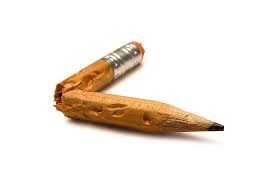
reading intervention class. I describe these learners as "pencil breakers." Literally, they break pencils.

And so a paradigm shift occurs when educators band together and pledge to "do whatever it takes" to interrupt the downward spiral that can lead to utter defeat and negative behaviors.

After all, it is much "cooler" to act out and spend a day or so in detention than to reveal to the world the inability to read grade level texts. These are some of the tools I've used as a literacy coach to reach these learners.

Get Kahoot!

Using a simple and speedy ‘drag n drop’ creation tool, educators can easily create and manage ‘Kahoots’ in the form of quizzes, surveys or polls related to specific topics.

Simple quizzes can happen at the drop of a hat to get feedback or opinion, or more in depth questions for formative assessment. Content can be shared with educators, learners or colleagues globally.


This video game site couldn't be any easier to use and kids love it!
1. Log onto Kahoot!
2. Create a free account.
3. Choose a premade quiz or create your own.

Kahoot builds comprehension by teaching kids to monitor their comprehension. Instead of disengaging as with traditional teaching methods, kids engage in the learning process!


Cheat to Learn

Luke (not his real name) returned in the fall as a more confident reader. His beginning of the year reading screeners showed growth in reading comprehension and yet I never saw him with a book.

I pulled him aside and asked point blank, "What did you read over the summer? Your reading scores have sky rocketed!"
Luke shrugged his shoulders. "I didn't read. I hate to read," he said matter-of-factly.
After prodding, Luke admitted to reading game cheats to his favorite game, Minecraft.

I can hear naysayers whisper, "The student needs to be reading instructional texts that will help him pass his state assessment or that will prepare him for high school."

Reading game cheats may be unconventional, but I stand by this methodology. Luke's comprehension is increasing because he is engaged in complex texts. Luke is strengthening his ability to think critically and his vocabulary is growing exponentially.

High-interest articles can be found on the internet, as well. Here is an example:
Mind Controlled Video Games

I pitch the article by asking, "What if you could play a video game without touching the controls and control it with your mind?"

Seriously, what middle school gamer wouldn't want to read this?!?

Writing Expository Texts

The better kids read...the better they write. Carlos (not his real name) hated to write. We considered it progress if he wrote more than four sentences without disrupting the entire sixth grade classroom by making farting sounds and making his teacher consider early retirement.

Thankfully, his teacher was a kind soul who focused on growth and what he could do as opposed to what he should do. 

The prompt: "Write about an discovery that has changed your life."

A discovery that changed my life was electronics. I think that the first electronic was the phone. It allowed people to communicate. Some stuff came out like computers, t.v., radios, and finally gaming. It is entertaining, fun, and makes me think, and it helps me with hand eye cordintion. Some games alow me to play with other people like online and i can chat with my friends. if I didn't have electronics i would not be able to watch t.v. or call my friends or text my friends. I also wouldn't be able to play games with my friends. i would be very bored especialy without gaming.

Video Game Coding

Creating video games builds comprehension by engaging learners in informational texts and following written directions. Video games can be integrated into literacy circles and writing prompts could be tweaked to target unmotivated writers.

This year several of our sixth grade English Language Arts classes designed a "Hero's Journey" unit. Kids collaborated in groups to create a new hero to represent their book. In a stroke of genius, one activity was to design a video game to represent a challenge their character would need to overcome.

Several websites were introduced to the learners:
Gamefroot http://gamefroot.com/
Scratch https://scratch.mit.edu/
Stencylhttp://www.stencyl.com/

Middle school gamers come into our classroom and are bored and unengaged. If they are struggling readers, the odds of changing their outlook is next to impossible.

While I cringe at the thought of our middle schoolers hooked up to headsets and hyper focused on blowing up empires, this is a reality.

If, as educators, we can find innovative ways to integrate video game experiences in lesson design, at least we have a chance.

Remember: Technology is a TOOL for learning...not a learning OUTCOME.

Games made by Kids via Brain Pop! http://www.brainpop.com/educators/community/student-made-games-2-game-making/

Confession Reflection

1. What are advantages of integrating video games into lesson design? What are some disadvantages?

2. What is one baby step educators could take to begin integrating video games into the classroom? i.e. play Kahoot, writing prompts

3. How do skills like video games help prepare learners for the real world?
Investigate how businesses such as McDonald's are using video games to prepare employees.

4. Why is it important to teach digital literacy?

Tuesday, February 10, 2015

Secrets from the Crypt

It was a Monday when Harold (not his real name) motioned for me to join him at his locker.

Harold is GT. While most GT kids seemingly gravitated towards dinosaurs in elementary school, Harold researched Egyptian history. When the King Tut exhibit rolled thru Dallas in 2008, he was one of the first to see it.

He was also the first to tell me about every artifact he could recall from his day at the museum.

 By virtue of being in all Pre AP and GT classes, Harold can come across like a know-it-all. Sometimes I feel like he thinks he knows more than me!

 
I looked both ways as I scurried across a dangerous intersection of giggling girls on their way to 6th
grade lunch. “What is it, Harold? What did you want to show me?”

 He looked to the left and to the right. “Mrs. Dollar, I’m going to learn to read the language,” he said in a hushed tone. “I’m going to teach myself to write it, too!”

 “What kind of language?”

”You know. The secret language.”

 Harold pulled out a brown paper lunch sack and reached inside like an archeologist excavating a rare find.

I could see the Half-Price Books sticker peeling off the weathered brown cover. I recognized it right away.

It was a Gregg Shorthand Manual.
 

 Back story:

 I was the short-hand champion in high school only because my advisory teacher, Mrs. Platemus (not her real name), insisted I take shorthand as a “career path.”


The truth was that because I played the piano, I was also a fast typist making me a perfect candidate for district competition. Typing I was good at, but learning shorthand was very much like learning a foreign language.


As much as I hated hours of practice, filling up steno pad after steno pad with pencil strokes, by sheer determination my chicken scratches slowly came to life. Sometimes when I’m tired and taking hand written notes, I slip back into my old habits and use shorthand script.

The secret language was nothing more than shorthand. Harold must have seen shorthand notes scattered across my desk.

I could certainly understand how to a 21st century native like Harold, shorthand would look very much like something found in an Egyptian crypt!
 
I decided then and there to shoot straight. Harold was now in middle school and I’d rather break it to him early in year to prevent being teased for the duration of his middle school life.

By virtue of his obsession with Ancient Egypt and his awkward attempts to socialize, he was already wearing a target on his back. I was not going to be responsible for painting it neon orange!


 “Harold, I am very impressed that you want to write and read the types of notes I sometimes write, but I need you to know that this isn’t hieroglyphics.”

I paused, carefully choosing the right words. “This is called shorthand and is nothing more than symbols that represent sounds.”
 
Harold looked at me like I had just beamed down from another planet.” I know, Mrs. Dollar. I thought you might need someone to read and write your notes when you retire...since you don’t have Siri.”

Then it dawned on me. Harold (in his own way) respected that I was holding on to a form of communication that was now obsolete. He had chosen to learn to read and write shorthand just as the archeologists study to preserve the history and stories of the ancient Egyptians.

I confess that I still use shorthand when I’m tired and I slip back into my old habits. But I'm okay
with it.I am confident that when steno pads start popping up in 20th century time capsules or surface in antique wooden office desks and file cabinets, their history will be preserved because Harold will be there to ensure that it does.

I'm sure of it.
 
Confession Reflection:
  • What other communication tools might become obsolete in the near future? i.e. cursive handwriting, word processers How will this impact how I teach today?
  • How can educators help students strengthen skills sets for a career that may not even exist?
  • Why is it important to embrace technology?

Monday, December 8, 2014

How Not to Be A Grinch During The Holiday Season


As we enter the Yuletide season of joy and giving, let's be honest. Every last nerve in our body is about to tested. Our students are on the verge of eating excessive amounts of sugar for breakfast, lunch, and dinner. They will be bombarded with ads for the newest, coolest toys on the internet and at their neighborhood Walmart.

Their eyes will glaze over during class with visions of robot toys that shoot lasers at annoying little sisters, or video games that blow up evil empires while simultaneously chatting with an opponent in the UK.

As engaging as we try to make our lessons, they will not be able to compete with the big man in the fat red suit sporting a white beard who owns flying reindeer.  Yes. Whether we want to admit it or not, we are all at risk of becoming a Grinch.

Before it's too late, I've pulled together five safeguards to protect our students, parents, and ourselves.

Safe Guard #1. Expand your heart.

During this holiday season, two types of students tend to emerge. The Cindy Loo Who's who are innately kind, loving, and will complete homework and projects in a timely manner. You will love these students. "Who" wouldn't?

But what about the non-Cindy Loo Who's who will fail to complete assignments, push your last button, and then go home and tell their parent that you hate them. Take a deep breath. A mentor of mine once said, "Fake it until you feel it." Act like you love The Cindy Loo Who's and the Non-Cindy Loo Who's and you'll be surprised when your heart catches up!

"And what happened then? Well, in Whoville they say that the Grinch's small heart grew three sizes that day." The Grinch Who Stole Christmas

Safeguard #2. Collaborate don't isolate.

It is easy to feel like you are the only teacher on the planet who is considering early retirement (and
it's your first year) but know that you are not alone! Teachers all across the U.S. and Canada are feeling the effects, as well.

Just as you would never attempt Black Friday or Brown Thursday alone, you should not take on the days and weeks leading up to winter break alone. Go to your team and express how you are feeling. Chocolate also helps!

Safeguard #3. Be realistic. 

As excited as you are about completing an ice sculpture of the Great Wall of China in your World Geography class, this is not the time or the place.Variables like shorter attention spans, additional carbs to induce sleeping, and inevitable interruptions by your former students coming by to remind you why you love to teach, are very, very real.

Ask yourself. What assignments can wait until these variable diminish? Separate the need to do's from the I want to's and you will become far less frustrated. Taking on too much can make you feel like you are a horrible teacher, which of course, you aren't.
Safeguard #4. Be kind.

Even if you have failed miserably at Safeguards #1-#3, it is never too late to change your behavior. Before sending out the mass email and a bcc: to your principal about the teacher whose students are climbing the walls. Stop!

Before posting or emailing anything ask yourself: Is it biased? Could it be taken out of context? Is it hurtful? If you can answer one or more of these questions with a yes, you need step away from your computer, Ipad, or Iphone and take a deep breath.

This is the perfect moment to engage in a random act of kindness!

Safeguard #5. Be thankful.

Hands-down one of the best Grinch repellents is a spirit of thankfulness. Begin making a list of reasons to be thankful. Warning: While you may exude thankfulness on a normal basis, you may struggle. This isn't to say you aren't a grateful person...because you are! Remembering the reasons you are thankful is more about reminding you of the person you truly are. You are NOT a Grinch..so don't act like one!

Wednesday, November 26, 2014

A Thanksgiving Tribute to Charles Schultz

charles schulzEvery year before Thanksgiving break I give a mini lesson to my creative writing class on the Peanuts cartoon creator, Charles Schultz. I begin with something like, "Long before there were blogs, Twitter, Instagram, or the internet for that matter, there was a form of communication made entirely of paper."

I pause for dramatic effect and with all the enthusiasm I can muster up I say. "It was called a newspaper!"

At this point, eyes roll and I get the usual "Mrs. Dollar we know what a newspaper is!" Next, I stream a vintage Peanuts cartoon strip onto a screen in front of the class.


"But wait!" I say excitedly. "What you may not know is that Sunday was my favorite day because cartoons were....are you ready...they were printed in color!" 

I confess it gets harder every year to get a middle school audience excited about the Peanuts creator. If it weren't for holiday specials and parade inflatable floats, Charlie Brown, would most likely be forgotten as have many vintage cartoon characters like Lil' Abner or Blondie. But I press on because cartoonist like Charles Schultz have so much to teach us.

There is something raw and honest about his cartoons.

Charles Schultz admitted that Charlie Brown was his alter ego. I found a clip that shows the artist sketching Charlie. He says,"Charlie Brown is I think a little bit like everyone. We all need reassurance to know that someone likes us." http://www.tubechop.com/watch/4221600

As my family prepares for our holiday meal, we have A Charlie Brown Thanksgiving on the television. Once again, Charlie Brown feels like he's ruined everything. I think we all have felt this way at one time or another. I know I have.And once again we are reminded of the true reason we celebrate:

 Charlie Brown: I don't feel bad for myself, I just feel bad because I've ruined everyone's Thanksgiving.

Marcie Brown: But Thanksgiving is more than eating, Chuck. You heard what Linus was saying out there. Those early Pilgrims were thankful for what had happened to them, and we should be thankful, too. We should just be thankful for being together. I think that's what they mean by 'Thanksgiving,' Charlie Brown.


Charles Schultz once wrote a brief quiz that went something like this:

Name three Nobel prize winners.
Name the three wealthiest people in the world.
Name this year's Heisman trophy finalists.

Then he asked three more questions:

Name three teachers who affected your life.
Name three friends who stood by you.
Name three people you like to be around.

Charles Shultz believed that celebrities don't make the biggest impact on our lives. The people close to us do. The people we live and work with and those who care about us are the ones who matter most.

And to this I say, "You're a good man, Charles Schultz!"

To learn more about this incredible man check out HuffPost's 20 Things You Didn't Know About Charles Schultz

Sunday, October 12, 2014

5 Things Bad Teachers Do Very, Very Well!


1. Mr. Ima N. Kuntroll: Ultimate Disciplinarian
Bad Teachers run their classrooms with military precision. Desks are in neat rows. You can hear a pin drop. Not only are their classes in perfect order, the Bad Teacher will be quick to point out to the principal (or even a School Board Member or two) how the new, unruly teacher across the hall has let his/her class run amuck.

The Bad Teacher has no tolerance for students talking, moving around, using technology without the constant supervision of the all seeing eye. Past performance records reflect their "well-run" classroom. Mr. N. Kuntroll prides himself on being the Captain of his Ship!
 
2. Ms. Claire Itty: The Lecturer
 

The Bad Teacher is able to teach with their eyes closed. Their voice is most often monotone and assume their students understand every word they're saying.

Strategies like introducing academic vocabulary before a unit or providing background knowledge are meaningless endeavors, especially since these tidbits of instruction were part of a prior grades' curriculum.

The Bad Teacher readily accepts the responsibility of teaching the grade-level curriculum. No more. No less. Ms. Claire Itty will be the first to tell you, "It is the student's job to ask questions when they do not understand."


3. Mr. Wunsize Fitzall: The Lesson Designer

The Bad Teacher is indubitably gifted in the art of lesson design. He is able to take state standards and seamlessly design a lesson to fit all students regardless of age or ability level.  Special Needs? Gifted and Talented? English Language Learner?

Response to Intervention? No problem! Each of these students will be expected to master the learning material without scaffolding or differentiation.

Mr. Wunsize Fitzall will be the first to tell you, "Our job is to prepare students for the real world. Adults don't get a scaffolded tax return."

. Ms. Fave Ortism: The Affirmer
The Bad Teacher is able to recognize the brilliance in her students, in spite, of what other students tell her. She wears the proverbial rose colored glasses. Be rest assured, when end of year award
nominations come out, it will be the student who is: studious, quiet in class, courteous, and is able to sit for extended lengths of time without the slightest shift in his/her desk.


On the flip side, The Bad Teacher will be ready, at the drop of a hat, to give zeros in the grade book and points off in an effort to shape the unacceptable behavior of distracted and talkative students. Ms. Fave Ortism recalls with fond memory, "I am able to spot the class pet within the first week of school. It is a pleasure to read and grade every assignment. I never tire of giving this student an A+ +  +."


5. Mr. Smartie: The Know-it-All!

 Anyone? Anyone? clip from Ferris Bueller's Day Off.

Bad Teachers are experts in their subject area. Their students are merely empty containers in need of the teacher's vast expertise to fill their empty minds. Regardless of advancements in technology, the Bad Teacher knows more.

How is this possible? Why, they have had more life experience and most likely have a Master's in their field of study. This is in no way to trivialize continued education! However, the Bad Teacher will forever remain the smartest person in the room. Mr. Smartie is quick to raise the point: What will happen when computers break?

 
Confession Reflection:
1.  Why is it important for teachers like Mr. Smartie to engage in continued professional development, especially in the genre of digital literacy?
2. How do administrators and instructional coaches support teachers like Mr. Wunsize Fitzall to design lessons that help level the playing field for struggling learners?
3. What are ways administrator's can protect new teachers from teachers like Mr. N. Kuntroll, who are mean spirited, and try to discredit them?


Sunday, September 7, 2014

Christmas in the Great Outdoors!


It wasn't my idea to have a Christmas in July party, but it happened. Imagine. Red house lights  blinking in the heat of the summer. Jingle Bells blaring from the stereo. A lamp post adorned with mistletoe and topped with a giant bow. Yes, and even a Christmas tree, tinsel and all, sitting in my driveway. Oh, and did I mention the reindeer? I'll get to that later.


I'm not exactly the social butterfly when it comes to neighborhood stuff. While I appreciate the occasional Bunko game or Tupperware party, I'm not one to initiate festivities. If you asked me to rate myself on the social spectrum, I may rate "plays well with others" but not much past that. Outside of my church and weekly Saturday morning coffee clutch with a few girlfriends, my social life has much to be desired.
When our church Care Group brought up the idea to have a Christmas in July party to get a jump start to support a local charity, I wanted to crawl under my chair. Since I was a group leader, I felt obligated to smile and say, "What a great idea!" Inwardly, I was thinking, How will our neighbors know that this is really going to a charity? What if they think we are con artists hording gifts for our own children?

I bounced the idea off of one of my best friends and told her my worries. Instead of affirming my fears, I heard, "Tamra, I think your overreacting."

Okay. I admit it. I have an overreacting problem. Like the time I was getting ready for a college sorority party and set the iron too hot and seared a hole in my favorite purple silk blouse. What did I do? I threw the singed iron away and swore to never iron again. I kept my favorite blouse with the triangular shaped hole hanging in my closet for weeks hoping I'd wake up and it would all have been a terrible dream. As for ironing, I've kept my promise.

And so we booked our children's pastor, Kelly Welhelmi, to put on a puppet show dressed in her outrageous character, Rudette, Rudolph the Red-Nosed Reindeer's sister. We printed off over 100 flyers and posted to every house on our cul-de-sac and surrounding blocks asking neighbors to bring an unwrapped gift. At the bottom of the flyer in bold face type was: All gifts will be distributed through our churches' children's outreach.

Well, a Texas heat wave had hit and my family and our church small group were sweating bullets the night of the party. We had fans blowing and chilled lemonade and enough watermelon to feed an army. A few members from our church small group mingled waiting to be swarmed by neighborhood children. My front yard was a sight to see with a Christmas tree in the driveway, house lights, and even mistletoe over the doorway entrance.


We waited. And waited. And waited some more. Where were my neighbors? I was embarrassed and was secretly hoping we'd printed the wrong date on the flyer. After forty-five minutes, my next-door-neighbor walked his nine-year-old daughter over to get a better look at the lady wearing a brown suit, antlers that dangled tinsel, and a glittery red nose. She placed an unwrapped My Little Pony toy and planted herself on our lawn. How could it be that only one child showed up?

And so I succumbed to my weakness. I overreacted.

I gave marching orders and sent my three children who at the time were, 5, 7, and 10 years, to knock on their friend's doors. I no longer cared about the gifts, I cared about saving face.

And that's when it hit me! Suddenly, I felt a sick feeling in the pit of my stomach and wished I could undo the moment I'd agree to the party. I'd cared more about collecting gifts for children I didn't know...without taking the time to build relationships with the people on my own street.

As it turned out, my kids were able to round up their friends...and neighbors slowly began to show up. I'm pleased to say by the end of the evening we ended up with around thirty people.


Looking back, something far more important than collecting gifts happened. I got to know my neighbors. The man whose dog barks all night. The lady who is pregnant with her fifth child. The kids who cut through our yard on their way to school, carrying their skateboards. The young couple who recently adopted a two-year-old from Korea. And we learned their names.
Long after the watermelon had been eaten, and Rudette had gone to wherever Reindeer go in the summer, our band of neighbors were talking, laughing, and sharing stories. Without asking, a collection was taken and we raised enough money to buy gifts. By all accounts, my Christmas in July party was a success. Our party had a write up in the neighborhood section of our local newspaper and my Christmas in July story was published in our church's monthly newsletter.

This year as I make last minute touches on my classroom, I am reminded that at the end of the day learning and teaching are about relationships. By nature teachers are task-oriented and standards-driven and sometimes lose focus. I recently watched this Ted Talk video by Rita Peirson and was reminded of the importance of valuing relationships: with our learners, parents, co-workers, and our community. Teaching is not only about content. It's about loving people.

Rita Peirson on building relationships with out learners:
http://www.ted.com/talks/rita_pierson_every_kid_needs_a_champion

Confession Reflection:

1. Why is it important to begin the school year focusing on relationship building?
2. What are some ways educators can nurture relationships outside of the classroom? In the community?
3. How do educators build a classroom community that is emotionally safe and encourages learners to explore and take risks?


Monday, August 4, 2014

Creating a New Structure to Grow 21st Century Learners

I confess that I don't have a green thumb. Maybe it is karma. My first memory of planting anything was as a five-year-old in my Sunday School class. We planted popcorn seeds in quart-size milk cartons that had been cut in half and filled with soil. It was a Bible lesson based on the Parable of the Sower and the Seed and how we have to protect God's word (the seed) when it is planted in our hearts (the soil). I remember the sheer joy I felt when the green stem broke through the soil. I was careful not to overwater. I had done everything right.


The problem was that I thought I was growing "popcorn." No one told me otherwise. And so I waited patiently over the course of what seemed like an eternity waiting for popcorn to bud. 

My granddad was a farmer and when he planted watermelon seeds, he got watermelons. When he planted cotton seeds, he got cotton. I fully expected popcorn.

I remember Mrs. Dazzlebright (not her real name) proudly handing our little plants back to us to take home. (I'm convinced to this day she switched some of the plants up. There was a kid whose plant never seemed to take off; however, on the final day of our lesson he suddenly had a green plant. I'm sure she had a few spares growing in her home just in case). I remember thinking, It's too early. It can't be ready to go home. There isn't any popcorn!

To my dismay, I was told that our lesson was over and we could take our plants home to continue to watch them grow. Best case scenario my plant might grow into a stalk one day, and produce corn. Those chances were slim to none. Suddenly, I realized my plant was doomed. I would not see popcorn explode from its leaves.

And so I did a horrible thing.

I was sitting on the front row next to my mom. As my dad reached the pivotal point in his Sunday sermon, my foot began an involuntary swinging motion. With one fatal swoop of my foot,  I kicked the plant. It wasn't a tap. It was a hard kick like when you're playing kickball. The container, dirt, my helpless plant flew across the linoleum and landed in front of the pulpit. My dad stopped momentarily and bent down and picked up the now empty carton in his hand and held it up. Tears streamed down my cheeks. Shame engulfed me.

Without missing a beat, he picked up the tiny plant that was now free of the container. He gently held the plant in his palm. In one hand he held the empty carton and the other he cradled the plant. I don't remember his exact words but this is how my adult mind remembers it, This plant is helpless without the safety of its holder. It will not be able to grow without the soil. It needs a second chance.

A movement called Genius Hour is sweeping the country. Based on Google's 20% philosophy, kids are given time within the school day to investigate what they are passionate about, design their own learning, and share with the world. Instead of teacher led tasks, kids innovate. Create. And grow. Genius Hour: Where Passion Comes to Life!

I was able to witness Genius Hour first hand on an elementary campus in my district, Cottonwood Creek Elementary. There was a group of English Language Learners writing a song and playing instruments in the hall. I saw fifth grade students supporting first graders to build a Lego castle. I saw a group of boys outside filming a "how-to-play football" video. I saw children creating a video game and learning to code. Technology was everywhere!

Kids were social. Talking. Learning.

Where were the teachers? They were visibly in the background. Watching. Supporting. Encouraging. But the children were clearly in charge of their learning. The principal was in the halls asking questions and calling each child by their name.

And that's when it hit me!

I had bought into the theory that children are suppose to grow "popcorn." We teach the curriculum, practice, reteach, nurture and love. We do everything "right." But what if we've been doing it all wrong? What if we need to turn our education system on its head? What if 21st century learning happens in a different container, using different tools, and the outcome is something we have yet to imagine?

Sir Ken Robinson says, "The current system was designed and conceived for a different age. We alienate millions of kids who don't produce in the old system. They don't produce in an academic system." In other words, they don't grow "popcorn" and are kicked out into the world without proper knowledge and tools to function in a 21st century world. They need a new container. They need a second chance.

Changing Education Paradigms Ted Talk

Confession Reflection:

1. What are some examples of "popcorn" or academic expectations that have been placed on our learners? i.e. high stakes testing scores, being "book smart"
2. How do we treat learners who don't produce the results we expect? i.e. Special programs, medication, more work
3. What are some barriers to changing our current system? How can these be overcome?
4. Why is it important to nurture and grow today's learners using a new paradigm or container? What are the dangers if we don't?


Sunday, June 1, 2014

Paint By Number and Run!

The map unfolded before me. Vast oceans filled with sunken treasures. Lands where Jesus himself had walked. Hills and valleys where the Shepherd boy, David, guarded his flocks until he grew up to take the throne as King of Israel. The Holy of Holy Land mapped out on a table in front of me with unopened paints in neat rows beside never-been-used brushes. Yes, the world was my oyster and at the ripe age of four-and-a-half, I was there to claim it...

Backstory:

My dad was the pastor of a small, Southern Baptist church in Renton, Washington. The church was called, Trinity Baptist, and was all about loving people of every walk of life and serving one another. I learned at an early age the importance of embracing people in spite of their imperfections, regardless of how much money they made, their political affiliations, or the color of their skin. Being a part of God's family, meant loving others, warts and all.

Sunday mornings meant cold cereal, sleeping in sponge rollers so I would have curls for the day, a Sunday School lesson, church, warm hugs, and more kisses than I wanted from a handful of adopted grandmothers. Since my own grandparents lived thousands of miles away in Texas, the elderly women from the "Naomi Class" seemed to fill this void. 

As our little church grew, we began running out of Sunday School class space and so it was decided that our basement would hold the weekly widow's Sunday School class. Our home, also called the parsonage, was a hop, skip, and a jump from the church and so it made for an easy trek to and from church.

One perk was that our basement was light and airy. The tip of the basement had a high window that let in sunlight from the front of the house, but in the back there was a full size sliding glass door that made the room full of natural light.

Since the members of the Naomi Class were planning a trip to the Holy Land, our basement was an ideal place to begin their nine month, in-depth study of the Holy Land.

A paint-by-number kit of the Holy Land, purchased with Sunday School funds, was set to chronicle their studies as these precious women prepared their hearts and minds for this once-in-a-lifetime pilgrimage.

Yes, the world was my oyster that summer day. The paints, the map, the clean, unused brushes begged to be brought to life with all the color and splendor it so deserved. One angel's voice whispered, "Paint just a corner of the ocean blue and no one will notice." The other angel warned, "Remember what your mom and dad told you? Run away...before it's too late!"

I decided that I liked the first angel's advice better and so I picked up a small vial of paint, took the lid off, dabbed a brush into the paint, and selected the number 14. The map evolved into what can only be described as a patchwork, calico-style painting interrupted with glimpses of splatter paint that resembled something more from outer space over any landform on earth.


Not the actual map (for display only)
Somewhere along the way, I had lost track of painting numbers and began to imagine real people I had learned about in my Sunday School class. The stories of David and Goliath, Samson, the boy with the five loaves and two fishes, the Battle of Jericho, had come to life amidst starbursts of vibrant color matched to random numbers.

Unfortunately, my artistic inspiration, fueled by unbridled passion, left paint on my shorts, shirt, elbows, cheeks, the floor, the table, and every square inch of the paint-by-number map.

It took several weeks to raise enough money doing extra chores and some money my parents pitched in to order a new Holy Land map from the Moody Bible Institute out of Chicago.

I also claimed that my brother, Brad, was as guilty as I was because he clapped and laughed when he saw me with paint on my hands and face (and that was after two baths and scrubbing with soap until my skin was red). However, he was pardoned given the fact that he had no paint on himself and my parents claimed was "too young to be an accomplice."

I'm pleased to say the widows of Naomi's class trip to the Holy Land went off without a hitch. The second map was far more boring than mine, but who am I to judge? The women returned beaming as if they'd seen heaven, itself. And I think they felt so sad for me since I was crying and visibly shaken when I had to tell them about their map and what I had done.

As a token of their love for me, they returned with a tiny gift. It was a necklace containing a vial with a mustard seed inside of it. I wasn't too impressed until they told me that if my faith was as big as that little seed (which is a little bigger than the size of a period at the end of a sentence), I could move mountains.


Seven months after receiving my mustard seed necklace, my brother, Brad, passed away unexpectedly. He had gone to the doctor for a well baby check-up and shots, and caught an aggressive form of meningitis from an unsterilized needle that had been used on an infected child in the next room. Brad was placed in the hospital and died in the wee hours of the night. The belief that I will see him again someday, has kept my faith strong.

My confession is that it's taken years to figure out how a tiny mustard seed can represent faith. But then it came to me that it isn't about the size. The power of faith is in the potential of the seed. It's the explosive, living power of hope and belief in what can't be seen and believing that it is. Faith isn't believing in superstition or old wives' tales. It is standing on the promises of God.

Truly I tell you, if you have faith as small as a mustard seed, you can say to this mountain, 'Move from here to there,' and it will move. Nothing will be impossible for you." Matthew 17:20

Got faith? Check out this link! Do you have mustard seed faith?

Confession Reflection:

1. What does faith mean to you? Describe a time in your life you've had to lean on your faith.
2. Why is it important to have faith? Why do you think faith is compared to a mustard seed?
3. Is there a mountain in your life that you need to move? What is it?
4. Research shows that "hope" is a predictor of learner success. Do you agree or disagree with this finding? Give your reasoning.


Sunday, May 11, 2014

Who Moved My Cheese?


With the 2016-2017 school year peeking around the corner, job fairs are popping up everywhere baiting hopeful applicants to believe they will soon land their dream job.

Right away you spot your dream job in your dream school district. And you think to yourself, if only Human Resources could see what my best friend, favorite Auntie, life coach and favorite college professor have seen all along: Any school district would be lucky to have such a gifted, brilliant, passionate educator on board!


And then the dreaded words, You're not the right fit or We went with a someone else hit you square between the eyes and send you in a tailspin.

Well, if this has happened to you...it's time to put on your running shoes because someone has...MOVED YOUR  CHEESE!!

Back story:

It was 1998 when a little book titled, Who Moved My Cheese? An Amazing Way to Deal With Change in Your Work and in Your life, by Spencer Johnson, became the David in a Goliath book market.

The same year my principal, Mr. Stuckman (not his real name),  made it a school wide expectation for each grade level team to complete Who Moved My Cheese? as a book study. He was also on the brink of retirement. Looking back I can see how this book was not so much about shifts in our educational system, but was as much about his own life and goals.

In case you've never heard of Who Moved My Cheese? it's a parable about four characters: two little men named, Hem and Haw, and two little mice named, Sniff and Scurry, who live in a large maze with cheese hidden in certain "stations."

Cheese is a metaphor for what a person (or mouse) wants to get out of life.

While Sniff and Scurry aren't the brightest in the bunch, they wake up early every morning, put on their running shoes, and race to find the cheese. They run into walls (a little too often) but aren't afraid to take risks and to explore new pathways. Trial and error get them from point A to point B.

Hem and Haw, on the other hand, are sophisticated little men; highly intelligent, thoughtful, but tend to overthink situations and are resistant to change.

Eventually, all four characters discover what they were looking for...a seemingly endless supply of cheese in Cheese Station C.

The little men feel they can finally be happy in life because cheese meant a big house, powerful position in the company, and a large paycheck.

For Sniff and Scurry, cheese meant food for the day because their happiness was not dependent upon the cheese itself.

For this reason, the wise little mice continue to wake up early every morning, put on their running shoes, and race to find new cheese and new paths.

Hem and Haw, on the other hand, grow lazy and wake late because they assume the cheese will always be waiting for them. Unfortunately, Hem and Haw do not read the "handwriting on the wall."

For this reason, I have referred back to the lessons in this little book when change happens in my own life. Here are some life lessons and insights I continue to take away from this little book:

1. The more important cheese is to me, the more I want to hang on to it!
2. I can't keep doing the same thing over and over and expect things to change!
3. Anticipate change. Smell the cheese often so I  know when it is getting old!
4. It's imperative that I let go of the past and adapt to the future!

Change happens. Period. The question is: Am I ready?

Confession Reflection:
  • What would you do if you weren't afraid? How would your thoughts and actions change?
  • Why is it important to "smell the cheese often?" Explain.
  • Have you ever had someone "move your cheese?" How did you respond?
  • What does cheese represent to you? Give examples.