Total Pageviews

Showing posts with label literacy. Show all posts

Monday, October 9, 2017

NaNoWriMo: A Teacher's Best Kept Secret to Inspire Young Writers!


I confess to experiencing a slump every October. While I am no longer in the classroom, I don't think I'll ever forget the weariness that set in this time of year. The beginning of year hype, drummed up by the convocation keynote and the "thumbs-up, go-get 'em" attitude from administrators, no longer inspired me.

One year, I secretly downloaded a free "Count Down App" on my Iphone. (I hang my head in shame). I indulged in watching the clock countdown to the last day of school.

In 2011, I was assigned to teach two elective creative writing classes. I looked forward to August and September because of the synergy coursing through my students' veins. New clothes, back-to-school pep rallies, kept learning engaging. October was ripe for writing scary stories and a dead-poet unit.

By November 1st, my students were experiencing sugar withdrawals from eating excessive amounts of Halloween candy. Major store chains began selling Christmas trees; giving my students the illusion that winter break had begun.

As a result, border-line panic hit. How could I hold my students' interests? Afterall, this was an elective!

An ELAR teacher on my campus learned about NaNoWriMo and passed along the word. Seriously, it was like manna from heaven!

What is NaNoWriMo YWP? NaNoWriMo YWP stands for National Novel Writer's Month Young Writer's Project. The goal for students is to plan and write a novel between November 1st and 11:59 PM on the last day of November.

This short video will allow you to see the benefits of the NaNoWriMo project.


I can tell you first-hand how the NaNoWriMo experience transformed my classroom and created pathways to authentic student learning and engagement.

In addition to the benefits expressed in the posted video, here are three additional ways this project transformed my classroom.

1. NaNoWriMo became a path to student engagement and creative written expression.

I always looked forward to introducing the lesson: "You are going to write a novel." Some students looked terrified at the novel-writing challenge, but by the time November 1st arrived, they were anxious to start their stories.

This is because NaNoWriMo has abundant resources to support students and teachers. For example, mid-October, I began integrating the Writer's Notebook into daily lessons. (See NaNoWriMo resource link here: https://ywp.nanowrimo.org/pages/writer-resources). Using a class account, my students were able to download and save a user-friendly file to a flashdrive or to their student document file. Students could complete self-paced lessons on plot mapping, character development, etc.

Students used Google docs to draft and write their stories. This allowed me to watch their novels in progress! I discovered Twilight fanfiction, zombie apocalypse stories, tragic romance dramas, adolescent underdog sagas, and coming-of-age stories. My students begged to keep writing to the last minute of class!

8th grade students write their novels using Google docs

6th grade students brainstorm topics for their novel
2. NaNoWriMo became a path to collaborative learning.

Collaboration is a future-ready skill our students will need to succeed in their careers. If you doubt this, think of ONE job where collaboration is not needed. Hmmm.

However, our educational system is designed to privilege isolated learning often under the guise of "individualization."  Walk down the halls of your school. Are desks in rows? Are students required to finish their homework alone? Would these student supporting student interactions outside of school be considered a form of cheating?

NaNoWriMo breaks down invisible barriers and allows students to become resources to one another.

For example, my students became collaborators in their writing. They would share their drafts with each other to find ways to develop a character or to resolve a problem in their story. Some students were natural born editors and helped others with the conventions of writing. Some students were especially creative and saw places where a plot twist could enhance a scene.

As my role shifted from being a "sage on stage" to a facilitator of student learning, natural relationships developed.

6th graders share drafts and get feedback from peers

3. NaNoWriMo became a path to authentic publication.

What if students could submit and have a completed novel published AND receive free copies of their book? I know. I didn't believe it either...until Melanie.

Melanie was a newcomer and her first language was Mandarin. She was also an avid reader. Think about the student who sits alone at lunch and reads or walks down the hall with their nose in a book, well, that was Melanie.

Melanie with her published novel
When I introduced my students to the  NaNoWriMo writing project, Melanie seemed relieved. Her writer's notebook replaced her nose-in-book lunch periods. She began coming to my room after school to talk about her NaNoWriMo draft.  Melanie shared her ideas and I was able to affirm her. She didn't need my ideas, Melanie needed to know that the answers were inside of her.

When the NaNoWriMo window closed, Melanie continued editing her novel. She had read the fine print on the NaNoWriMo YWP site. Little did I know that she had spent the winter break polishing and submitted a fifteen chapter novel, until she handed me an autographed copy! Inside the cover she had written:

Thank you, thank you, thank you. I can't say that enough. And, please, please, please wherever you read this, remember that you made half of it.
My heart felt thanks,

Melanie (last name omitted)

I recently reconnected with Melanie this fall. She is now a student at a Texas University on a full scholarship. While I am not able to say with conviction NaNoWriMo was the turning point in her life, I do believe she was given the confidence boost she needed.

Make this November part of your classroom success story by taking the first flying leap today!


Confession Reflection:

  • What are some contributing factors to teacher post-convocation stress? How might unconventional projects like NaNoWriMo alleviate stress?
  • What ELAR/English Common Core or state standards (TEKS)  are supported by projects like NaNoWriMo?
  • How would projects like NaNoWriMo support student agency?
  • Do you know of an educator who would benefit from the NaNoWriMo project? If so, spread the word!
To learn more about NaNoWriMo Young Writer's Project visit their website at:
https://ywp.nanowrimo.org/

This link will connect you to step-by-step instructions on how to sign up, set up your virtual classroom,  how to enroll your students, and resources to get your students started: https://ywp.nanowrimo.org/pages/for-educators


Tuesday, July 4, 2017

A Teacher's Summer Tale: The Trade Secrets to Creating Stories that Teach!

Family selfie, June 2016
near Trescott, Texas
I confess that I can weave a tale that would hold the attention of most reluctant readers and writers. The fateful tale of The Lost Camper and the Vampire Bats or The Possum Who Forgot to Play Dead are two of the top favorites. As a middle school literacy coach and reading intervention teacher, I learned the slick tricks to keeping middle schoolers (even addicted gamers) on the edge of their seat.

Disclaimer: These narratives do not come spilling out of my mouth. My stories are intentional and well-planned...and as unexciting as it sounds...often rehearsed in front of my dogs.

THIS BLOG IS NOT FOR ALL READERS. 

It is long-winded, but for the life of me, I didn't know what to cut out. So, no offense if you click out and check out one of my shorter, visually easier-to-read blogs. The top 10 blogs underneath my twitter feed is a good place to start.

And so without further adieu, I will share some of the tricks of the trade as I write a summer tale.

Narrator: Me (teacher)
Audience: Most often students who hate to read and write and are not afraid of tell you so
Length: No more than 10-15 minutes
Title: None (I will ask students to create one for me)
Other: My thoughts and notes in italicize 


Introduction: Hook the listener and provide essential background knowledge.

Before my story begins, you need to know that I, personally, do not hunt; but I'm not against wild hog hunting! I just can't shoot them myself. Actually, this is part of the story. This gives the listener a context. Now wild hogs, also called feral pigs, are not the cutesy, animated caricatures like Pumbaa from the Lion King or Wilbur from Charlotte's Web. I purposefully compare and contrast to familiar characters from books and/or movies. The wild hogs in my story are fiercely mean and dangerous...I use a pregnant pause to hook the reader...and deadly.

In fact, wild hogs in West Texas  pulverize (rich, descriptive vocabulary), or destroy, (demonstration of using a context clue) farmers' fields and eat their crops. At this point, I will allow a student to Google a picture and share with the class. This leverages students' out of school literacies to build background knowledge. Did you know that wild hogs can weigh between 300 to 500 pounds? I am modeling how to use a rhetorical question for a dramatic effect. These hogs have  jaws strong enough to break bones and devour entire carcasses. I might ask a questioned about the scientific name for an animal that eats both plants and animals.

If the wild hog feels threatened, they WILL attack humans. These are beasts (purposeful use of a metaphor) you do NOT want to meet face-to-face. The foundation of my story is laid and students have the background knowledge they need to make predictions and draw inferences as I weave my tale.

Beginning: Establish the setting and characters. 

It was late June when my husband, Mr. Dollar, myself, and our dog, Ben, were on a hunting trip with a few close friends. Since I don't hunt, I take along a good book to read. The land where we hunt has no cell phone service or I would be playing Words with Friends or Candy Crush! I mention Internet games because I want my students to see me outside of the classroom. It's part of characterization and often builds curiosity. Students are fascinated that teachers have a life outside of the classroom! 

Since wild hogs hunt at night, we were safe and sound I throw in an idiom, twenty-five feet off the ground, sitting comfortably in our deer stand. A deer stand is basically a wooden fort propped up by posts with windows on every side. I am using imagery to describe the setting. A wooden ladder, strategically propped against the doorway, is the only way to come and go. Now this is important to remember. I'm coaching my students on information to attend to as they listen. This will help my students to begin to look for clues in stories to support making inferences.

Beginning of story continued: Set the stage and begin building the plot.

Looking out into the night sky, I was able to see thousands of twinkling stars. This particular night it was so clear I was able to find constellations like the Big and Little Dipper. More imagery and connection to academic vocabulary. We had only planned on staying about an hour before heading back to our campsite. In spite of the grueling summer temperatures, at night the temperature may drop to the upper 50's or 60's (degrees Fahrenheit). I pretend to shiver for drama sake. 

Also, our friends were watching our dog, Ben, and knew to come look for us if we were gone for too long. Oh, I forgot to mention there are other dangers besides wild hogs! I do not say anything beyond this statement. Inadvertently students learn to internally ask themselves questions and drawing inferences. This is metacognition at its best!

The temperature was dipping I am purposefully using personification and I was ready to go back to camp. I took one step down the ladder when suddenly I heard a rustling noise coming from somewhere below the stand. This is the initial action that will set off the chain of events in the story.

Middle: Rising action and story climax told with voice inflections.

I froze in my tracks. I am now creating suspense and hoping students will begin making predictions based on the information so far. I always scope out faces for signs of boredom. 

I jumped into the stand and clung to Mr. Dollar. I am using a show-don't-tell strategy. 

What was that? I am also purposefully omitted dialogue tags like "I said" or  "he answered" because that is book talk. Narrative storytelling (apart from books) uses a different discourse. 

Before Mr. Dollar could say a word, we heard the noise again.

If I had to describe it, it would be a high-pitched scream that sounded neither human nor like an animal. It was ferocious sounding and sent chills up and down my spine. There is something enticing when a story teller is in the moment. The story doesn't sound rehearsed. I'd heard of bobcats living in West Texas, but had never heard of any in the area where we typically hunt. This statement teaches students how listeners can use their background knowledge/experiences to make predictions about text.

I prayed that whatever IT was, that IT wouldn't be able to climb the ladder.

Again, the horrific scream. I welcome interruptions at this point. Sometimes students  want to ask a clarifying question, makes a connection, or gives me an out affirmation like, "oh, snap!"

Chills covered my spine and my blood ran cold. This sentence is a trifecta: personification,idioms, and hyperbole combined. Remember there was no cell phone service and our only pair of walkie talkies were in our pick-up truck. We did have a rifle with a night a vision scope and a flashlight and we were prepared to use it. This sentence is important because it shows a fighting spirit; which is important to characterization and supports the end of the story.

We shined a flashlight down at the ground but saw nothing else.


Again, the horrific sound....This is the point to threaten to end the story...I'm not sure if I should continue, because you will not be able to unhear what I'm about to tell you. I use language my students use like "unsee", "unhear" or "throw shade at".

And that's where I will stop for today. This is how I know if the story is adolescent worthy. A good story will have students begging for more. 

Ending: Falling action and resolution after hearing sufficient begging.

Of course, I do finish my stories and ask for an honest evaluation (thumbs up or thumbs down). I tell students that I need their help to come up with a good title. This can be a competition or whole group effort. There are no grades assigned. No teacher ruse like telling students, "Now, you get to think of a story to tell your partner." NEVER. EVER. DO. THIS.

Kids are smart and will catch on that you only told the story to teach them something. This is true, of course. The trick is to do everything possible to avoid the slightest hint of the underlying lessons embedded in your story. When you've done this, you are on your way to mentoring others!

The bottom line is that I believe stories live inside of all of us. As teachers, we are FAR more valuable than the newest and coolest literacy program. Scripted programs or a bubble map can not come close to the well-planned lesson modeled by a teacher in storytelling form. This is because creativity can not be bottled or bought!

Sometimes the best lessons come from the imagination of excellent teachers.

What story lives inside of you?

Confession Reflection

  • In your opinion, are there advantages to teacher storytelling? Are there disadvantages?
  • Why would it be important to allow student-directed activities in response to a story (creating a title, researching more on a self-selected topic i.e. vampire bats)? Would student engagement change if teacher stories were followed up by graded assignments or a quiz?
  • What is the value of creating a space for teacher storytelling in the classroom? Why is it important to recognize and encourage teacher's unique voices and ways of telling stories?
  • How would teacher storytelling support student learning of Common Core standards?

Reference: Plot Map


Sunday, April 16, 2017

Ready...Set...Play!


It's that time of year when a collective sigh can be heard from teachers and administrators in schools across America. The one-size-fits-all, state-mandated accountability test is over. Now what?

Before introducing a new unit, I propose having an in-school playtime in your classroom.  I'm not talking about a whole class free-for-all that will result in your serious consideration of taking early retirement; but rather play that is manageable.

It is planned. It is focussed. It is productive.

Inviting play into the classroom is as easy as supplying a few board games purchased at a Goodwill, playdough, and legos. If you have access to Ipads and you are supported by your principal, play can turn into digital creations. (I'll share an example later).

Play can be cost efficient. Recipes for playdough can be found on Pinterest or a simple google search for teachers on a budget...um....aren't we all?

Why play?  Erik Jenson, author of Teaching with the Brain in Mind, contends play builds memory and improves parts of the brain used for problem-solving. There are countless studies by neuroscientists to support how positive emotions associated with play improve mood.

Think about the student in your classroom who is not able to remember how to get from point A to point B after you have gone over, and over, and over the instructions. Think about the student who looks sad and may even be acting out in anger.

I'm not saying throwing an activity together and calling it "play" will support students.  Play needs to be something that you (the teacher) will buy into or your stress will spill over into other parts of your life. You will feel like kicking the dog when you get home. If you're like me, there needs to be structure. Give students clear expectations. I went as far as to say to my middle schoolers how play improved learning. Make play work for you and your classroom. 

Here are some ways play supports learning:

1) Play fuels the brain.

After buying one too many games with missing pieces at garage sales, I decided to write a grant for board games. Before the ink was dry, a parent came to me and asked, "What if I could get games donated to your classroom?" In no less than a week, my campus's parent-teacher organization (PTO) collected and donated more games than I could have imagined (or afforded).

With the influx of games, I upped play days to the first 15 minutes of class two times a week. I noticed the students who routinely played board games participated more in classroom discussions. My first-period sleepy heads were visibly more awake and had fewer tardies.


2) Play builds self-efficacy.

Self-efficacy is a fancy term meaning the belief in oneself to complete tasks or reach goals. One year I had a student beg me to allow him to bring his new Lego collection to school on Fridays. (He had a 'special edition'). After pricing Legos on my own, I agreed.

During playtime, you would have thought my Lego builders were given a secret agent assignment because they seemed secretive about their creation.

One day my Lego builders called me over, "Mrs. Dollar, do you want to watch our Lego movie?"

"Your Lego movie?" I repeated. I had no idea.

After watching their movie, I was awe-struck. These were sixth graders with no previous experience (that I was aware of) in moving making of any kind.

When I asked how they learned to make the video, one of the students hunched his shoulders and answered, "I googled it!"

I also learned that my Lego builders had been learning about Recycling in their Science class.


3) Play improves mood.

Ask any teacher if learning should be fun, and you'll get a variety answers. I tend to reside in the "learning is fun" camp. In my opinion, there are far too many stresses our students deal with outside of the school walls. If play can bring some reprieve from life's disappointments like parents getting a divorce, or worries over money for groceries, then it is worth doing. 


I believe it is during play when students are able to take a moment and leave their stress at the classroom door. 

Note: I invited play into my middle school literacy classroom after attending a district training on teaching students in poverty with Eric Jensen. My assistant principal (and supervisor) asked me to try some of the strategies presented in the training as part of our campus initiative. One strategy involved using games to improve memory. The first year, I had phenomenal results in improved behavior and even test scores, that I continued using games. I added "play" because I had some students who didn't want to participate in an activity that involved competition. When play became a routine part of my classroom, I supported activities with state learning standards and added reading and writing extension activities. If you'd like to try implementing play on a routine basis, you'll need the support from your administration. 

Confession Reflection: 
  • How might play support a positive classroom learning environment?
  • What are some characteristics of play that would equip students with skills to be successful in the real world? i.e. taking turns, social language, collaboration
  • Why is it important for teachers to make play accessible to ALL students? What are the dangers of making play only accessible to 'well-behaved' students?
Resource:


Sunday, March 19, 2017

Lost in Translation: When Lesson Plans Go Wrong


As with most adventures in life, things don't always go as planned. It was 2007, light years away from Angry Birds, Iphones, and instagram. Class projects relied on the good ol' #2 pencil, glue stick, colored pencils, crayons, scissors, and a trusty ruler.

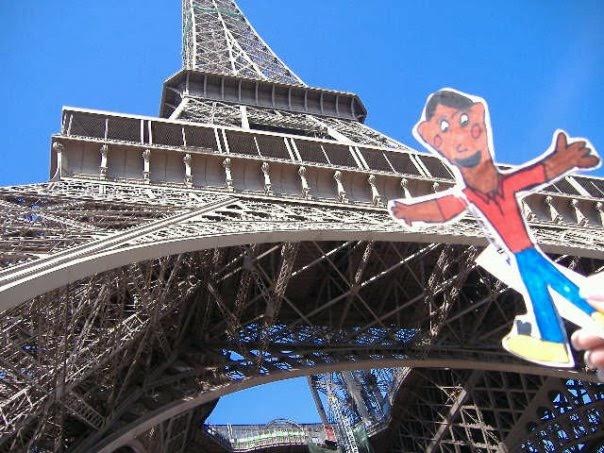
I was a week away from spending a romantic springbreak get-a-way with my husband touring the city of love and lights; Paris, France. But as with all teachers, it is in our DNA to carry our students in our hearts, even on vacation.

I was walking the aisles of Hobby Lobby when a miniature passport with the Eiffel Tower on the cover caught my eye. Wa-La! The Flat Stanley project was scheduled to launch. It would be the crème de la crème of literacy ventures. I would take a class-made Flat Stanley to Paris, snap photos, and return ready to translate the photos into a journal starring our very own Flat Stanley.

Before internet gizmos and gadgets, hashtags, and Avatars, Flat Stanley was a simple paper cut-out, shaped like a boy with reddish-brown hair, fair skin, and rosy cheeks. He was an ordinary boy until a bulletin board fell on him during the night flattening him. The 1964 book series, by Jeff Brown, has Stanley capturing burglars and retrieving keys from storm drains; feats of heroism attainable because of his flatness.

As fate would have it, the day my literacy class was scheduled to discuss our global project, I bit down on a cherry jolly rancher and cracked my back molar. I went to the dentist and was told I needed a root canal. I scrambled sub plans and wrote detailed notes on Flat Stanley literacy circles, mapping out his adventures to famous landmarks, and of course, using paper templates of Flat Stanley.

When I returned on Thursday, teachers would vote anonymously on which Stanley would go. It was a lot to ask from a substitute, but visions of the project trumped any common sense.


Dreams of French pastries and desserts kept me strong through the ordeal, and I was confident the Flat Stanley project would prevail. I would not...could not...let a jolly rancher take me and our class project down.

The swelling was worse than expected and  a dry socket would keep me out until Friday...the last day before spring break. I emailed my substitute who assured me the students were "highly engaged" and the students' characters were "coming along nicely."

I returned to school to find a plethora of paper creations lining the walls, only none of them looked like Flat Stanley.  I opened my book bag and a lump formed in my throat.

The crispy white sheets of Flat Stanley templates, were tucked neatly inside my school tote bag, along with my project plans. 


I looked around the room. There was a Harry Potter look-alike (scar and all), a transformer, a Justin Bieber, and even a Pegasus. I wanted to cry. What have they done? I cursed the jolly rancher. In the absence of templates and lesson plans, the students didn't know that they were creating a Flat Stanley replica that would actually go to France.


My substitute wasn't to blame either. I had forgotten to take the templates out and half of the plans were paper clipped to the copies. She only knew to read books and have students create a character using their imagination. It was the best I could've expected, really, given the circumstances.

I confess that I blamed the jolly rancher for years for the project gone bust. But there was a bright spot in the Flat Stanley Fiasco, as I called it for years. His character was unmistakable. With the exception of Flat Stanley's hair and white complexion, it was Kenny to a tee.

He had also designed a passport with a hand-drawn Eagle on the cover with black marker.

I pulled him aside, "You did a wonderful job drawing your character. What is his name?" (I excepted for him to say his name).

"Mrs. Dollar! He already has a name...Flat Stanley!"

After class, I quietly asked Kenny if he'd like for me to take his Flat Stanley and he answered, "Duh! That's why I made a passport!"

I confess that I wanted to create an authentic Flat Stanley, the one Mr. Brown would be proud of (or so I thought), but my teacher inner voice screamed no! I guess you could say it's one of the moments when, as a teacher, I had to let go of preconceived notions, my ideal lesson, the crème de la crème project.. and go with the heart.

To learn more about the Flat Stanley Literacy project: http://www.flatstanley.com/

Confession Reflection:
  • Has there ever been a project/lesson that didn't go the way you planned? What did you learn from the experience?
  • Can you think of a teacher who affirmed you in some way? Did the experience shape how you relate to your students?
  • How can administrators nurture a climate that affirms risk-taking and celebrates "jolly rancher" moments?
I originally published this blog in 2013, but decided to republish this year. This is one of my all-time favorite blogs. I also found more pictures to post. 

Thursday, July 23, 2015

The Ghost Plant and Other (Potentially) Fateful Tales

Nancy Drew Vintage Books
Holding my number 2 pencil in perfect form, I smiled at the empty page before me. I was ready. Today my mystery plant would be revealed. Like the great literary masterpiece series: Nancy Drew Mysteries, I had high hopes that my story, The Ghost Plant, would one day be the first of a trilogy to include: The Ghost Cat and The Ghost Tree.

Line by line, I painstakingly formed my letters, capitols and lowercase, meticulously connecting to the lined boundaries on the paper. My ambition was to craft a story about a forest plant so rare and mysterious, the plant could not be found in my fourth grade Science textbook. It was, however, hidden in one of the volumes in an Encyclopedia Britannica which sat on a shelf at my Grandparent's farmhouse.

Back Story:
Vintage 1952 Edition
As my Papa tells it, he had been sucker punched into buying a set of  leather-bound Encyclopedia Britannicas by a door-to-door salesman. Who can put a price on knowledge? History is history and they'll never be out of date! What better gift than to leave the gift of knowledge as an inheritance to your children, grandchildren, and great-grandchildren! the salesman (most likely) pitched.

And so my Grandparents bought the 24 volume set and autobiographical addition for more money than they care to admit. But like many Americans in the 1950's and 1960's, having a set of encyclopedias in one's home was like having the internet today. If you owned Encyclopedias, well, you had the world of knowledge at your fingertips. To the elation of my Grandparents, I was carefully taking notes on the bit of information I could decipher about this one-of-a-kind plant. I suspect I wrote something to this effect:

Yes, Mrs. Killjoy. This is a real plant.
1. Ghost plants live in forests.
2. Ghost plants do not use Photosynthesis.
3. Ghost plants do not have chlorophyll and are transparent.

As I scripted my story during class, I defaulted to my imagination and filled in the blanks for pieces of information I had failed to include. I also did not understand the difference between a "book report" and a "story."  When my name was called, I handed my "story" appropriately titled "The Ghost Plant" to my fourth grade teacher. The next day my "story" was handed back to me with a C- on the cover.

As a further act of humiliation and shame, Mrs. Killjoy (not her real name) wrote in ominous red ink next to my title: THERE IS NO SUCH THING AS A GHOST PLANT.

In one swoop of her evil pen, Mrs. Killjoy had squashed my excitement and confidence. My aspirations of becoming a mystery writer had both been born and died in fourth grade.

Moments like these, are forever stamped in our childhood memories, and if we are not careful, can begin to shape our self-image as a writer and as a person.

I recalled this story last  summer while working with a reluctant seven-year-old writer named Conner. He is vivacious, talkative, and loves to read about sharks. He also hates to write. When I asked him why he didn't like to write he answered, "It takes too long!"
"What if you could write about sharks and you could write as little or as much as you wanted?" And to close the sell I added, "And you won't have to rewrite to make corrections."

3D color page by @quivervision
He looked at me suspiciously, chose a marker and wrote, "Sharks have five rose of teeth."

What did I notice? He had written "rose" instead of "rows."

But that was NOT what Conner needed to hear. He needed to know that he could use writing as a way to communicate. He needed to write about anything he wanted and read by (not corrected by) an authentic audience. Conner needed to have the freedom to write with confidence without a writing teaching saying, "Now go back and correct..." which is like saying to a emergent writer, "Your writing isn't good enough."

In a competitive world and race to be academically exemplary, WHAT IF we carved out moments when our learners could write without the fear of being corrected? WHAT IF the Conners of the world could create without being graded or corrected under the guise of "teachable moments? WHAT IF this generation finds their voice and believe that what they have to say matters?

Rose instead of rows
I have a sick feeling in the pit of my stomach that we, as educators, are devaluing our kids when we rush to point out how many points they did or didn't earn. I can't help but wonder, Are we creating a culture of fearful writers?

In a world of high stakes testing in fourth, seventh, and ninth grades, we are thrown into a very real conundrum. How do we affirm children's writing and teach the skills needed to become effective communicators? How do we embrace "teachable moments" without shutting down a struggling writer?

What if we, as educators, stepped back and paused before marking up a child's writing and comparing against a 6 point rubric? What if we pledged to ourselves: Before I have the right to correct, sit down, point out your errors, I will affirm you as a writer who has something important to say? 

Assessments will come and go...but valuing (or devaluing) a child's voice will stay with them forever. When we give them a voice we empower them to make changes in their own lives, their community, and the world.

The question is, "Are we listening?"

Confession Reflection:
  • Have you ever experienced a time when your writing was not affirmed by a teacher? How did this impact your attitude towards writing?
  • How do we cultivate a generation of confident and creative writers while teaching the necessary skills to be effective communicators? i.e. blogging, interactive writing.
  • How can we Differentiate Instruction for diverse writers such as in RtI, economically disadvantaged, ELL learners? Is differentiation a fair practice? Why or why not?
Book Recommendation:
Click to read an excerpt from Katherine Bomer's book, Hidden Gems.

Sunday, March 2, 2014

A Colt Named Carl

I spotted him across the aisles of baskets of ferns and Christmas garland. There was something distinct about this colt. Maybe it was the crayon scribbles across his saddle or the way he leaned precariously to one side or the missing strands of yarn from his mane.

All the same, I left my local Goodwill with a Clue game and a Star Wars puzzle (which I discovered later was missing an edge and two pieces from the Death Star), justifiably for my classroom, but not with the lopsided horse.


Maybe it was predestined, but I left my wallet on the counter and a spunky, auburn-haired girl wearing a badge named Nan was waving it in the air just as I re-entered the store.

I thanked Nan and then the words every bargain shopper this side of the Mississippi can't resist blared over the intercom, "For the next hour all orange tagged items are half off."

There was no turning back. I grabbed my wallet and was caught up in a stampede of other bargain shoppers in the direction of "orange tagged" items. It didn't matter if the orange tagged item was a set of golf clubs, ubiquitous painting of snow-covered mountains, mismatched set of holiday dishes, or a personalized cookie jar, for that matter.

The sheer rush of adrenaline that coursed thru my veins created a borderline hoarder mentality which is the reason seasoned thrift shoppers like myself must be careful and ask, "Do I really need this item? or Do I want it because it has an orange tag and I don't want anyone else to have it?"

Which is exactly why I ended up carrying an over-sized, over-stuffed, pony which  I purchased for a whopping $3.50. I didn't need it and I didn't want the lady wearing the gray sweater to have it.

As with most teachers, our car's interior holds numerous ungraded papers, at least two umbrellas, a crumpled fast food wrapper or two, stapled notes from last summer's professional development we swear we are going to file or scan (depending upon our technology comfort level), and at least 45 cents (most likely made up of dimes, nickels, and pennies) just out of reach between the driver's seat and console.

A few crumpled wrappers I could live with but not a stuffed animal the size you might win at a carnival. And so it was that a Colt named Carl made its way into my literacy classroom. What happened in my classroom in the years that followed, is undeniable.

Since finding his way into my classroom, I've witnessed a reluctant 8th grader who would rather play Call of Duty than eat or breathe, choose Carl as a reading backrest and lose himself in a book. I've seen a stressed out eleven-year-old whose parents were going thru a divorce, relax while fidgeting with the yarn on his mane. I've even heard kids called "dibs" on him; which is the highest honor when it comes to pre-teens' territorial nature.

And so I've developed a theory about comfort objects like stuffed animals and middle schoolers. I believe there is still a child-heart in these learners in spite of how cool and worldly they try to act. Eleven and twelve year olds are in an awkward phase of life. They're too old to play with dolls and robots, build blanket forts at birthday parties, or wear capes and pretend to be Spiderman. On the flip side, they have a whole life ahead of them to lose sleep over whether or not a Senate house bill will pass or the collapse of civilization as we know it.

I believe that the middle school years should be a right of passage, if you will. It's the period when kids can secretly believe that Santa climbed down their chimney in the wee hours of the night and that there is still a chance they will one day be able to leap tall buildings in a single bound. It's a window of time when they can hold on to the magic of their childhood while building skills to survive high school.

Carl has taught me the importance of designing a learning environment that feels safe and taking risks are encouraged. As the years go by, I have had high school learners come back to say "hi" to Carl. I've even heard of kids posting "selfies" on Instagram with none other than Carl himself.

I don't pretend to understand how or why this odd purchase made such a difference in the culture of my classroom. Sometimes magic just happens.

(Author's note: Carl received his official name and became known as my class mascot before I was aware this had happened. Word just spread somehow. This group of 6th graders in my Flex class actually threw him a birthday party. Obviously, I was the only one who didn't know it was his birthday).


Click here to learn more! How important is building a positive learning environment?'


Confession Reflection:

  • What are some characteristics of a positive learning environment?
  • Research shows that optimum learning happens in a safe environment. What does this mean?
  • How can teacher entitlement (my room, my rules) be a barrier to building a culture of learning?
  • Do you agree or disagree with this statement? Learners should have a voice in designing their learning space.