Total Pageviews

Saturday, January 3, 2015

Building Creative and Confident 21st Century Writers


It's a scenario I've seen play out in middle school over and over again. Ask a learner to write and one of two things happen. I get the "deer in the headlights" look or get bombarded with a slew of questions like, "Is this for a grade?" and "When is it due?"

I have yet to see a face that is fearless and excited about writing. Why is this? I've pondered this question longer than I probably should have, but I think I've put my foot on at least part of the solution.

This is what I pledge to do in 2015:

1. Create a safe environment that embraces mistakes as part of the learning process.

I believe that confident writers are fearless. They know mistakes will happen but they are willing to jump anyway. They know that their attempts will be affirmed and not condoned.

In order for this to happen, the learning environment is set up in such a way to celebrate risk taking.
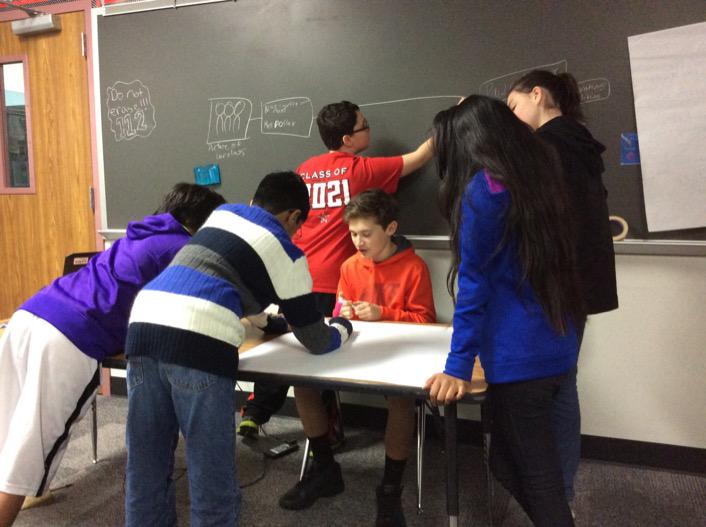
creative writers collaborating on a class newsletter
Trust me. One of the most difficult things for an educator to do is to step back and give learners control over their writing.

I can already hear the voice of naysayers. "How will young and inexperienced writers learn if we don't show them?" True. But we also need to step back and let young writers fall into their own style and find their voice.

The last thing we need are more cookie cutter writing samples. My goodness! We need to create writers who will stand out from the crowd!

Easier said than done, right?  Shifting from a fixed mindset to a growth mindset is imperative in order to accept imperfection and embrace the writing process. Freeing writers from fear based writing begins with an environment that celebrates taking risks!

2. Create a learning environment that focuses on growth not the grade.

I've come up with a name for an excessive focus on grading. I call it "gradidous". It seems to start in 6th grade and reaches near epidemic proportions by 8th grade.
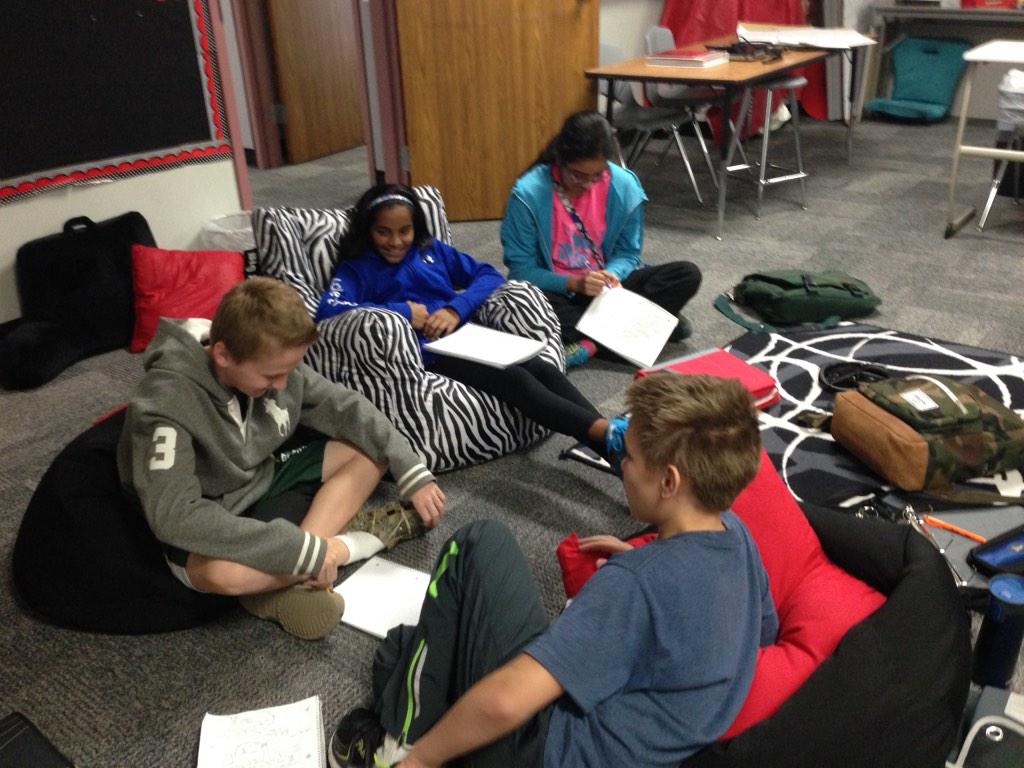
creative writers give and get feedback from peers
Gradidous is most often the root cause of fear based writing. Symptoms include (but are no limited to) plagiarism, overt parental involvement in assignments, or worst of all, an "I don't care" attitude of the heart.

I learned this lesson from Samantha (not her real name). Samantha was the archetype perfectionist writer who relied heavily on parent coaching. I finally required journals to be left in the classroom. Samantha one upped me and asked to use technology to write. Of course! Isn't part of learning about giving voice and choice?

creative writers have voice and choice
Are you sitting down? I discovered a parent (or someone) contributing to her writing from another location using a shared google doc.

Samantha was literally having another person write for her using google docs! When Samantha discovered what she was able to do on her own, learning could take place. Furthermore, removing the "A" or "100" ball-and-chain allowed her to de-stress and find her own voice.

What does a grade say anyway?  It is far more valuable to sit down with a learner and talk thru their writing, or better yet, have writing communities for learners to support one another. Even the best of compliments are nothing but hot air without meaningful feedback that encourages and coaches on ways to polish their writing. Some of our learners may write like scribblers. Everyone is on a different stage and page in the writing process and they need to be treated as such.

Digital portfolios, writer's notebooks, reflection journals allow learners to show growth throughout the year. Keep the focus on growth!

3. Create an environment that extends beyond the classroom.

By middle school it isn't enough to have a their papers taped to grandma's refrigerator door. LearnersWhat does my writing matter? Why am I doing this? Kids need to know the expectations and purpose for the assignment.
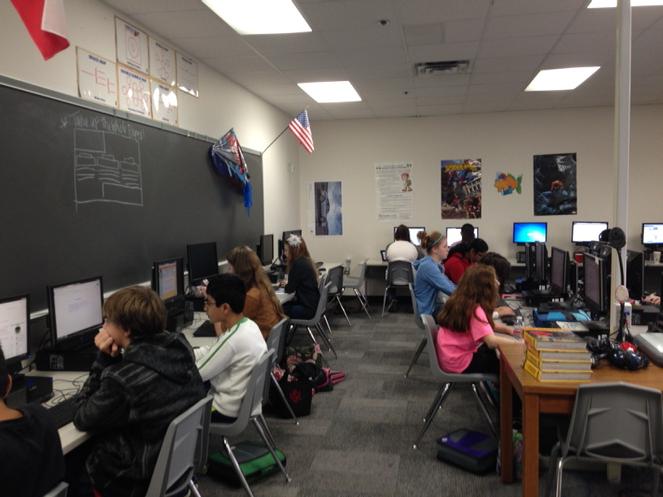
Is the assignment to relay information about a Science experiment? (Expository) Is the purpose to share with others my feelings or write a story? (Narrative). Every writer needs to have purpose other than "it's part of the curriculum" or "it will prepare you for high school."
creative writers composing interest-driven stories

Marcus (not his real name) refused to write. Not only did he refuse to write, he was an in-your-face kid would wasn't afraid to show his contempt for writing. However, he did like to draw
.
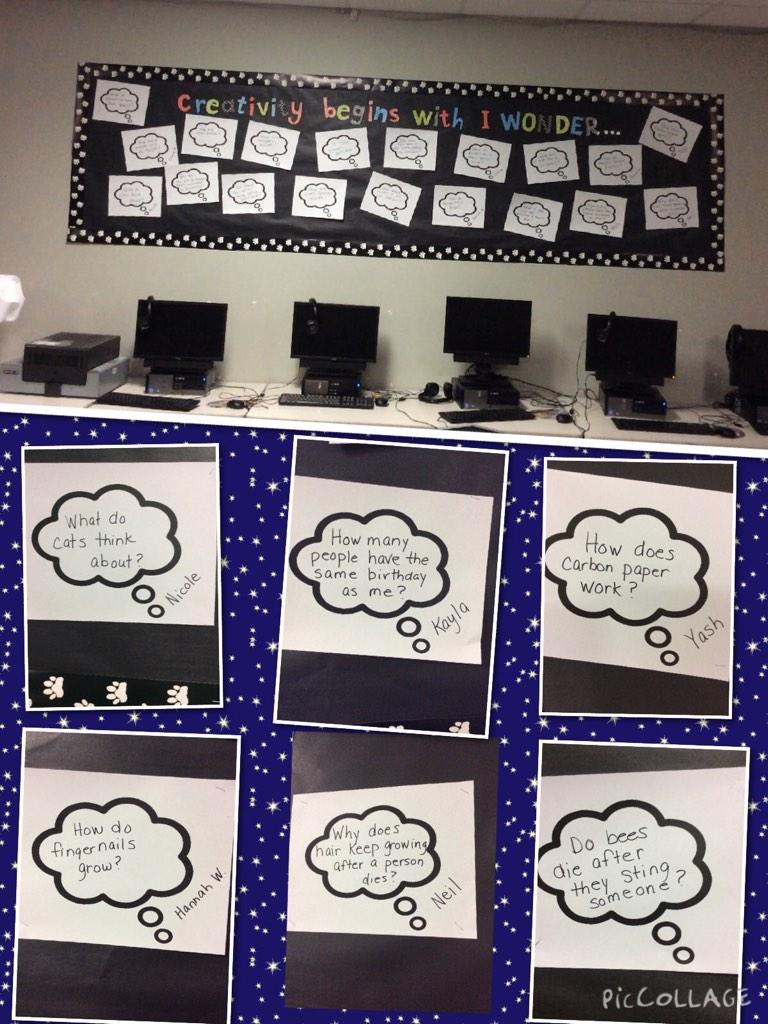
our class "wonder wall"
Exasperated I said, "Forget that you're writing. If you can express yourself in pictures, go for it!" What happened? He doodled daily and ended up creating a series of doodles which became a graphic story with high hopes to publish one day.I truly believe that Marcus's ability to express himself was a far greater lesson than anything he could have learned thru traditional methods.

Marcus needed purpose beyond the four walls of our classroom. He needed to know that his writing mattered. Yes, there were teachers who shun this method, but when a learner is failing and emotionally heading down a destructive path...you do what's best for that child.


As the new year begins, I pledge to give learners more opportunities during the school day to blog, journal, free write, and even text. Now that I think about it, isn't writing about communication? There is an ebb and flow to every writer as they step into their own style. Fearless writing begins in the safety of a classroom where risks can be taken, growth is celebrated, and purpose goes beyond the walls of a school.

Confession Reflection:

1. Why is it important to individualize writing instruction?
2. What are some other ways writing can be measured other than grades?
3. How can writing instruction be designed to teach structure but also spark creativity?


Monday, December 8, 2014

How Not to Be A Grinch During The Holiday Season


As we enter the Yuletide season of joy and giving, let's be honest. Every last nerve in our body is about to tested. Our students are on the verge of eating excessive amounts of sugar for breakfast, lunch, and dinner. They will be bombarded with ads for the newest, coolest toys on the internet and at their neighborhood Walmart.

Their eyes will glaze over during class with visions of robot toys that shoot lasers at annoying little sisters, or video games that blow up evil empires while simultaneously chatting with an opponent in the UK.

As engaging as we try to make our lessons, they will not be able to compete with the big man in the fat red suit sporting a white beard who owns flying reindeer.  Yes. Whether we want to admit it or not, we are all at risk of becoming a Grinch.

Before it's too late, I've pulled together five safeguards to protect our students, parents, and ourselves.

Safe Guard #1. Expand your heart.

During this holiday season, two types of students tend to emerge. The Cindy Loo Who's who are innately kind, loving, and will complete homework and projects in a timely manner. You will love these students. "Who" wouldn't?

But what about the non-Cindy Loo Who's who will fail to complete assignments, push your last button, and then go home and tell their parent that you hate them. Take a deep breath. A mentor of mine once said, "Fake it until you feel it." Act like you love The Cindy Loo Who's and the Non-Cindy Loo Who's and you'll be surprised when your heart catches up!

"And what happened then? Well, in Whoville they say that the Grinch's small heart grew three sizes that day." The Grinch Who Stole Christmas

Safeguard #2. Collaborate don't isolate.

It is easy to feel like you are the only teacher on the planet who is considering early retirement (and
it's your first year) but know that you are not alone! Teachers all across the U.S. and Canada are feeling the effects, as well.

Just as you would never attempt Black Friday or Brown Thursday alone, you should not take on the days and weeks leading up to winter break alone. Go to your team and express how you are feeling. Chocolate also helps!

Safeguard #3. Be realistic. 

As excited as you are about completing an ice sculpture of the Great Wall of China in your World Geography class, this is not the time or the place.Variables like shorter attention spans, additional carbs to induce sleeping, and inevitable interruptions by your former students coming by to remind you why you love to teach, are very, very real.

Ask yourself. What assignments can wait until these variable diminish? Separate the need to do's from the I want to's and you will become far less frustrated. Taking on too much can make you feel like you are a horrible teacher, which of course, you aren't.
Safeguard #4. Be kind.

Even if you have failed miserably at Safeguards #1-#3, it is never too late to change your behavior. Before sending out the mass email and a bcc: to your principal about the teacher whose students are climbing the walls. Stop!

Before posting or emailing anything ask yourself: Is it biased? Could it be taken out of context? Is it hurtful? If you can answer one or more of these questions with a yes, you need step away from your computer, Ipad, or Iphone and take a deep breath.

This is the perfect moment to engage in a random act of kindness!

Safeguard #5. Be thankful.

Hands-down one of the best Grinch repellents is a spirit of thankfulness. Begin making a list of reasons to be thankful. Warning: While you may exude thankfulness on a normal basis, you may struggle. This isn't to say you aren't a grateful person...because you are! Remembering the reasons you are thankful is more about reminding you of the person you truly are. You are NOT a Grinch..so don't act like one!

Wednesday, November 26, 2014

A Thanksgiving Tribute to Charles Schultz

charles schulzEvery year before Thanksgiving break I give a mini lesson to my creative writing class on the Peanuts cartoon creator, Charles Schultz. I begin with something like, "Long before there were blogs, Twitter, Instagram, or the internet for that matter, there was a form of communication made entirely of paper."

I pause for dramatic effect and with all the enthusiasm I can muster up I say. "It was called a newspaper!"

At this point, eyes roll and I get the usual "Mrs. Dollar we know what a newspaper is!" Next, I stream a vintage Peanuts cartoon strip onto a screen in front of the class.


"But wait!" I say excitedly. "What you may not know is that Sunday was my favorite day because cartoons were....are you ready...they were printed in color!" 

I confess it gets harder every year to get a middle school audience excited about the Peanuts creator. If it weren't for holiday specials and parade inflatable floats, Charlie Brown, would most likely be forgotten as have many vintage cartoon characters like Lil' Abner or Blondie. But I press on because cartoonist like Charles Schultz have so much to teach us.

There is something raw and honest about his cartoons.

Charles Schultz admitted that Charlie Brown was his alter ego. I found a clip that shows the artist sketching Charlie. He says,"Charlie Brown is I think a little bit like everyone. We all need reassurance to know that someone likes us." http://www.tubechop.com/watch/4221600

As my family prepares for our holiday meal, we have A Charlie Brown Thanksgiving on the television. Once again, Charlie Brown feels like he's ruined everything. I think we all have felt this way at one time or another. I know I have.And once again we are reminded of the true reason we celebrate:

 Charlie Brown: I don't feel bad for myself, I just feel bad because I've ruined everyone's Thanksgiving.

Marcie Brown: But Thanksgiving is more than eating, Chuck. You heard what Linus was saying out there. Those early Pilgrims were thankful for what had happened to them, and we should be thankful, too. We should just be thankful for being together. I think that's what they mean by 'Thanksgiving,' Charlie Brown.


Charles Schultz once wrote a brief quiz that went something like this:

Name three Nobel prize winners.
Name the three wealthiest people in the world.
Name this year's Heisman trophy finalists.

Then he asked three more questions:

Name three teachers who affected your life.
Name three friends who stood by you.
Name three people you like to be around.

Charles Shultz believed that celebrities don't make the biggest impact on our lives. The people close to us do. The people we live and work with and those who care about us are the ones who matter most.

And to this I say, "You're a good man, Charles Schultz!"

To learn more about this incredible man check out HuffPost's 20 Things You Didn't Know About Charles Schultz

Sunday, October 12, 2014

5 Things Bad Teachers Do Very, Very Well!


1. Mr. Ima N. Kuntroll: Ultimate Disciplinarian
Bad Teachers run their classrooms with military precision. Desks are in neat rows. You can hear a pin drop. Not only are their classes in perfect order, the Bad Teacher will be quick to point out to the principal (or even a School Board Member or two) how the new, unruly teacher across the hall has let his/her class run amuck.

The Bad Teacher has no tolerance for students talking, moving around, using technology without the constant supervision of the all seeing eye. Past performance records reflect their "well-run" classroom. Mr. N. Kuntroll prides himself on being the Captain of his Ship!
 
2. Ms. Claire Itty: The Lecturer
 

The Bad Teacher is able to teach with their eyes closed. Their voice is most often monotone and assume their students understand every word they're saying.

Strategies like introducing academic vocabulary before a unit or providing background knowledge are meaningless endeavors, especially since these tidbits of instruction were part of a prior grades' curriculum.

The Bad Teacher readily accepts the responsibility of teaching the grade-level curriculum. No more. No less. Ms. Claire Itty will be the first to tell you, "It is the student's job to ask questions when they do not understand."


3. Mr. Wunsize Fitzall: The Lesson Designer

The Bad Teacher is indubitably gifted in the art of lesson design. He is able to take state standards and seamlessly design a lesson to fit all students regardless of age or ability level.  Special Needs? Gifted and Talented? English Language Learner?

Response to Intervention? No problem! Each of these students will be expected to master the learning material without scaffolding or differentiation.

Mr. Wunsize Fitzall will be the first to tell you, "Our job is to prepare students for the real world. Adults don't get a scaffolded tax return."

. Ms. Fave Ortism: The Affirmer
The Bad Teacher is able to recognize the brilliance in her students, in spite, of what other students tell her. She wears the proverbial rose colored glasses. Be rest assured, when end of year award
nominations come out, it will be the student who is: studious, quiet in class, courteous, and is able to sit for extended lengths of time without the slightest shift in his/her desk.


On the flip side, The Bad Teacher will be ready, at the drop of a hat, to give zeros in the grade book and points off in an effort to shape the unacceptable behavior of distracted and talkative students. Ms. Fave Ortism recalls with fond memory, "I am able to spot the class pet within the first week of school. It is a pleasure to read and grade every assignment. I never tire of giving this student an A+ +  +."


5. Mr. Smartie: The Know-it-All!

 Anyone? Anyone? clip from Ferris Bueller's Day Off.

Bad Teachers are experts in their subject area. Their students are merely empty containers in need of the teacher's vast expertise to fill their empty minds. Regardless of advancements in technology, the Bad Teacher knows more.

How is this possible? Why, they have had more life experience and most likely have a Master's in their field of study. This is in no way to trivialize continued education! However, the Bad Teacher will forever remain the smartest person in the room. Mr. Smartie is quick to raise the point: What will happen when computers break?

 
Confession Reflection:
1.  Why is it important for teachers like Mr. Smartie to engage in continued professional development, especially in the genre of digital literacy?
2. How do administrators and instructional coaches support teachers like Mr. Wunsize Fitzall to design lessons that help level the playing field for struggling learners?
3. What are ways administrator's can protect new teachers from teachers like Mr. N. Kuntroll, who are mean spirited, and try to discredit them?


Sunday, September 7, 2014

Christmas in the Great Outdoors!


It wasn't my idea to have a Christmas in July party, but it happened. Imagine. Red house lights  blinking in the heat of the summer. Jingle Bells blaring from the stereo. A lamp post adorned with mistletoe and topped with a giant bow. Yes, and even a Christmas tree, tinsel and all, sitting in my driveway. Oh, and did I mention the reindeer? I'll get to that later.


I'm not exactly the social butterfly when it comes to neighborhood stuff. While I appreciate the occasional Bunko game or Tupperware party, I'm not one to initiate festivities. If you asked me to rate myself on the social spectrum, I may rate "plays well with others" but not much past that. Outside of my church and weekly Saturday morning coffee clutch with a few girlfriends, my social life has much to be desired.
When our church Care Group brought up the idea to have a Christmas in July party to get a jump start to support a local charity, I wanted to crawl under my chair. Since I was a group leader, I felt obligated to smile and say, "What a great idea!" Inwardly, I was thinking, How will our neighbors know that this is really going to a charity? What if they think we are con artists hording gifts for our own children?

I bounced the idea off of one of my best friends and told her my worries. Instead of affirming my fears, I heard, "Tamra, I think your overreacting."

Okay. I admit it. I have an overreacting problem. Like the time I was getting ready for a college sorority party and set the iron too hot and seared a hole in my favorite purple silk blouse. What did I do? I threw the singed iron away and swore to never iron again. I kept my favorite blouse with the triangular shaped hole hanging in my closet for weeks hoping I'd wake up and it would all have been a terrible dream. As for ironing, I've kept my promise.

And so we booked our children's pastor, Kelly Welhelmi, to put on a puppet show dressed in her outrageous character, Rudette, Rudolph the Red-Nosed Reindeer's sister. We printed off over 100 flyers and posted to every house on our cul-de-sac and surrounding blocks asking neighbors to bring an unwrapped gift. At the bottom of the flyer in bold face type was: All gifts will be distributed through our churches' children's outreach.

Well, a Texas heat wave had hit and my family and our church small group were sweating bullets the night of the party. We had fans blowing and chilled lemonade and enough watermelon to feed an army. A few members from our church small group mingled waiting to be swarmed by neighborhood children. My front yard was a sight to see with a Christmas tree in the driveway, house lights, and even mistletoe over the doorway entrance.


We waited. And waited. And waited some more. Where were my neighbors? I was embarrassed and was secretly hoping we'd printed the wrong date on the flyer. After forty-five minutes, my next-door-neighbor walked his nine-year-old daughter over to get a better look at the lady wearing a brown suit, antlers that dangled tinsel, and a glittery red nose. She placed an unwrapped My Little Pony toy and planted herself on our lawn. How could it be that only one child showed up?

And so I succumbed to my weakness. I overreacted.

I gave marching orders and sent my three children who at the time were, 5, 7, and 10 years, to knock on their friend's doors. I no longer cared about the gifts, I cared about saving face.

And that's when it hit me! Suddenly, I felt a sick feeling in the pit of my stomach and wished I could undo the moment I'd agree to the party. I'd cared more about collecting gifts for children I didn't know...without taking the time to build relationships with the people on my own street.

As it turned out, my kids were able to round up their friends...and neighbors slowly began to show up. I'm pleased to say by the end of the evening we ended up with around thirty people.


Looking back, something far more important than collecting gifts happened. I got to know my neighbors. The man whose dog barks all night. The lady who is pregnant with her fifth child. The kids who cut through our yard on their way to school, carrying their skateboards. The young couple who recently adopted a two-year-old from Korea. And we learned their names.
Long after the watermelon had been eaten, and Rudette had gone to wherever Reindeer go in the summer, our band of neighbors were talking, laughing, and sharing stories. Without asking, a collection was taken and we raised enough money to buy gifts. By all accounts, my Christmas in July party was a success. Our party had a write up in the neighborhood section of our local newspaper and my Christmas in July story was published in our church's monthly newsletter.

This year as I make last minute touches on my classroom, I am reminded that at the end of the day learning and teaching are about relationships. By nature teachers are task-oriented and standards-driven and sometimes lose focus. I recently watched this Ted Talk video by Rita Peirson and was reminded of the importance of valuing relationships: with our learners, parents, co-workers, and our community. Teaching is not only about content. It's about loving people.

Rita Peirson on building relationships with out learners:
http://www.ted.com/talks/rita_pierson_every_kid_needs_a_champion

Confession Reflection:

1. Why is it important to begin the school year focusing on relationship building?
2. What are some ways educators can nurture relationships outside of the classroom? In the community?
3. How do educators build a classroom community that is emotionally safe and encourages learners to explore and take risks?


Monday, August 4, 2014

Creating a New Structure to Grow 21st Century Learners

I confess that I don't have a green thumb. Maybe it is karma. My first memory of planting anything was as a five-year-old in my Sunday School class. We planted popcorn seeds in quart-size milk cartons that had been cut in half and filled with soil. It was a Bible lesson based on the Parable of the Sower and the Seed and how we have to protect God's word (the seed) when it is planted in our hearts (the soil). I remember the sheer joy I felt when the green stem broke through the soil. I was careful not to overwater. I had done everything right.


The problem was that I thought I was growing "popcorn." No one told me otherwise. And so I waited patiently over the course of what seemed like an eternity waiting for popcorn to bud. 

My granddad was a farmer and when he planted watermelon seeds, he got watermelons. When he planted cotton seeds, he got cotton. I fully expected popcorn.

I remember Mrs. Dazzlebright (not her real name) proudly handing our little plants back to us to take home. (I'm convinced to this day she switched some of the plants up. There was a kid whose plant never seemed to take off; however, on the final day of our lesson he suddenly had a green plant. I'm sure she had a few spares growing in her home just in case). I remember thinking, It's too early. It can't be ready to go home. There isn't any popcorn!

To my dismay, I was told that our lesson was over and we could take our plants home to continue to watch them grow. Best case scenario my plant might grow into a stalk one day, and produce corn. Those chances were slim to none. Suddenly, I realized my plant was doomed. I would not see popcorn explode from its leaves.

And so I did a horrible thing.

I was sitting on the front row next to my mom. As my dad reached the pivotal point in his Sunday sermon, my foot began an involuntary swinging motion. With one fatal swoop of my foot,  I kicked the plant. It wasn't a tap. It was a hard kick like when you're playing kickball. The container, dirt, my helpless plant flew across the linoleum and landed in front of the pulpit. My dad stopped momentarily and bent down and picked up the now empty carton in his hand and held it up. Tears streamed down my cheeks. Shame engulfed me.

Without missing a beat, he picked up the tiny plant that was now free of the container. He gently held the plant in his palm. In one hand he held the empty carton and the other he cradled the plant. I don't remember his exact words but this is how my adult mind remembers it, This plant is helpless without the safety of its holder. It will not be able to grow without the soil. It needs a second chance.

A movement called Genius Hour is sweeping the country. Based on Google's 20% philosophy, kids are given time within the school day to investigate what they are passionate about, design their own learning, and share with the world. Instead of teacher led tasks, kids innovate. Create. And grow. Genius Hour: Where Passion Comes to Life!

I was able to witness Genius Hour first hand on an elementary campus in my district, Cottonwood Creek Elementary. There was a group of English Language Learners writing a song and playing instruments in the hall. I saw fifth grade students supporting first graders to build a Lego castle. I saw a group of boys outside filming a "how-to-play football" video. I saw children creating a video game and learning to code. Technology was everywhere!

Kids were social. Talking. Learning.

Where were the teachers? They were visibly in the background. Watching. Supporting. Encouraging. But the children were clearly in charge of their learning. The principal was in the halls asking questions and calling each child by their name.

And that's when it hit me!

I had bought into the theory that children are suppose to grow "popcorn." We teach the curriculum, practice, reteach, nurture and love. We do everything "right." But what if we've been doing it all wrong? What if we need to turn our education system on its head? What if 21st century learning happens in a different container, using different tools, and the outcome is something we have yet to imagine?

Sir Ken Robinson says, "The current system was designed and conceived for a different age. We alienate millions of kids who don't produce in the old system. They don't produce in an academic system." In other words, they don't grow "popcorn" and are kicked out into the world without proper knowledge and tools to function in a 21st century world. They need a new container. They need a second chance.

Changing Education Paradigms Ted Talk

Confession Reflection:

1. What are some examples of "popcorn" or academic expectations that have been placed on our learners? i.e. high stakes testing scores, being "book smart"
2. How do we treat learners who don't produce the results we expect? i.e. Special programs, medication, more work
3. What are some barriers to changing our current system? How can these be overcome?
4. Why is it important to nurture and grow today's learners using a new paradigm or container? What are the dangers if we don't?


Sunday, June 1, 2014

Paint By Number and Run!

The map unfolded before me. Vast oceans filled with sunken treasures. Lands where Jesus himself had walked. Hills and valleys where the Shepherd boy, David, guarded his flocks until he grew up to take the throne as King of Israel. The Holy of Holy Land mapped out on a table in front of me with unopened paints in neat rows beside never-been-used brushes. Yes, the world was my oyster and at the ripe age of four-and-a-half, I was there to claim it...

Backstory:

My dad was the pastor of a small, Southern Baptist church in Renton, Washington. The church was called, Trinity Baptist, and was all about loving people of every walk of life and serving one another. I learned at an early age the importance of embracing people in spite of their imperfections, regardless of how much money they made, their political affiliations, or the color of their skin. Being a part of God's family, meant loving others, warts and all.

Sunday mornings meant cold cereal, sleeping in sponge rollers so I would have curls for the day, a Sunday School lesson, church, warm hugs, and more kisses than I wanted from a handful of adopted grandmothers. Since my own grandparents lived thousands of miles away in Texas, the elderly women from the "Naomi Class" seemed to fill this void. 

As our little church grew, we began running out of Sunday School class space and so it was decided that our basement would hold the weekly widow's Sunday School class. Our home, also called the parsonage, was a hop, skip, and a jump from the church and so it made for an easy trek to and from church.

One perk was that our basement was light and airy. The tip of the basement had a high window that let in sunlight from the front of the house, but in the back there was a full size sliding glass door that made the room full of natural light.

Since the members of the Naomi Class were planning a trip to the Holy Land, our basement was an ideal place to begin their nine month, in-depth study of the Holy Land.

A paint-by-number kit of the Holy Land, purchased with Sunday School funds, was set to chronicle their studies as these precious women prepared their hearts and minds for this once-in-a-lifetime pilgrimage.

Yes, the world was my oyster that summer day. The paints, the map, the clean, unused brushes begged to be brought to life with all the color and splendor it so deserved. One angel's voice whispered, "Paint just a corner of the ocean blue and no one will notice." The other angel warned, "Remember what your mom and dad told you? Run away...before it's too late!"

I decided that I liked the first angel's advice better and so I picked up a small vial of paint, took the lid off, dabbed a brush into the paint, and selected the number 14. The map evolved into what can only be described as a patchwork, calico-style painting interrupted with glimpses of splatter paint that resembled something more from outer space over any landform on earth.


Not the actual map (for display only)
Somewhere along the way, I had lost track of painting numbers and began to imagine real people I had learned about in my Sunday School class. The stories of David and Goliath, Samson, the boy with the five loaves and two fishes, the Battle of Jericho, had come to life amidst starbursts of vibrant color matched to random numbers.

Unfortunately, my artistic inspiration, fueled by unbridled passion, left paint on my shorts, shirt, elbows, cheeks, the floor, the table, and every square inch of the paint-by-number map.

It took several weeks to raise enough money doing extra chores and some money my parents pitched in to order a new Holy Land map from the Moody Bible Institute out of Chicago.

I also claimed that my brother, Brad, was as guilty as I was because he clapped and laughed when he saw me with paint on my hands and face (and that was after two baths and scrubbing with soap until my skin was red). However, he was pardoned given the fact that he had no paint on himself and my parents claimed was "too young to be an accomplice."

I'm pleased to say the widows of Naomi's class trip to the Holy Land went off without a hitch. The second map was far more boring than mine, but who am I to judge? The women returned beaming as if they'd seen heaven, itself. And I think they felt so sad for me since I was crying and visibly shaken when I had to tell them about their map and what I had done.

As a token of their love for me, they returned with a tiny gift. It was a necklace containing a vial with a mustard seed inside of it. I wasn't too impressed until they told me that if my faith was as big as that little seed (which is a little bigger than the size of a period at the end of a sentence), I could move mountains.


Seven months after receiving my mustard seed necklace, my brother, Brad, passed away unexpectedly. He had gone to the doctor for a well baby check-up and shots, and caught an aggressive form of meningitis from an unsterilized needle that had been used on an infected child in the next room. Brad was placed in the hospital and died in the wee hours of the night. The belief that I will see him again someday, has kept my faith strong.

My confession is that it's taken years to figure out how a tiny mustard seed can represent faith. But then it came to me that it isn't about the size. The power of faith is in the potential of the seed. It's the explosive, living power of hope and belief in what can't be seen and believing that it is. Faith isn't believing in superstition or old wives' tales. It is standing on the promises of God.

Truly I tell you, if you have faith as small as a mustard seed, you can say to this mountain, 'Move from here to there,' and it will move. Nothing will be impossible for you." Matthew 17:20

Got faith? Check out this link! Do you have mustard seed faith?

Confession Reflection:

1. What does faith mean to you? Describe a time in your life you've had to lean on your faith.
2. Why is it important to have faith? Why do you think faith is compared to a mustard seed?
3. Is there a mountain in your life that you need to move? What is it?
4. Research shows that "hope" is a predictor of learner success. Do you agree or disagree with this finding? Give your reasoning.