Total Pageviews

Sunday, March 8, 2015

Rules of Engagement: Administering State Assessments and Living to Tell About It


Disclaimer: The views I express in this blog are entirely my own.
 
Once again it's time for every student in the United States to take some form of a standardized state assessment. It's federal law and there is no way around it.
 
And so I've decided to dedicate this blog to support educators like myself who begin eating an excess amount of comfort foods like Peanut M & M's and popcorn doused in real butter.
 
Here are my "go to" set of rules which have helped me survive the yearly state assessment.
 
1. No cell phone.

The day before warn your family and friends that they will not be able to reach you while the test is in progress. Make sure they have the phone number to the front office in case of emergency.

Next, turn your cell phone off and place it somewhere out of reach, but not forgotten. Even if you are tempted to play Words with Friends for a triple word score, your phone is far out of reach.

Make a note on the inside palm of your hand with a non-permanent marker as a reminder where you placed your cell phone. This will save you the embarrassment of admitting to the whole school via mass email that you need help finding your phone.


2. Monitor closely.

Think back to the previous week's training and PowerPoint on how to administer the assessment.
Your principal will most likely allow you to dress down and wear your most comfortable shoes.


The point is to be comfortable because you will be walking around to "actively" monitor your students.

Do NOT pull out your grade book or email a parent. This is against policy and could result in losing your hard earned teaching certificate. Even if these trainings bore you to tears, take the rules seriously!

3. Keep your eye on the test.

Never leave the tests unattended, even if everyone is finished and you need to make a quick run to
relieve your bladder. Have a hall monitor or another teacher stay with the students until you return or the tests have been taken up by administration. If there are still a few students testing, you will still need to be an active monitor.


4. Control your bladder.
 
Remember the coffee you drink every morning? Well, this is the one day to go for a smaller cup with higher concentration of caffeine.
 
Depending on the size of your bladder, control your liquid intake. This includes water, sodas, power drinks, and so forth. This rule will make rule #3 easier to follow.


5. Stay calm and breathe.


Students have a sixth sense and can sense when teachers are about to crawl out of their skin. This can cause additional stress to the student, as well as, give you an ulcer.

As simple as it may seem, remember to breathe. Find a happy place in your heart to focus on in case panic starts to set in.

Warning: This is especially true when the lower reader in your class finishes in a record seventeen minutes and is convinced he or she "rocked" the test.

Most importantly, remember it is ONE test and should not define who you are as a teacher.

Now go find your cell phone.

Confession Reflection:

1. Why is it important to review policy and procedures before the test? What steps can I take to ensure these policies are followed?

2. What can I do if I am confused about a student's testing accommodation? How do I verify this information?

3. In what way can we stop state standardized scores from negatively impacting a student's self-esteem? Why is this important?
 

Tuesday, February 10, 2015

Secrets from the Crypt

It was a Monday when Harold (not his real name) motioned for me to join him at his locker.

Harold is GT. While most GT kids seemingly gravitated towards dinosaurs in elementary school, Harold researched Egyptian history. When the King Tut exhibit rolled thru Dallas in 2008, he was one of the first to see it.

He was also the first to tell me about every artifact he could recall from his day at the museum.

 By virtue of being in all Pre AP and GT classes, Harold can come across like a know-it-all. Sometimes I feel like he thinks he knows more than me!

 
I looked both ways as I scurried across a dangerous intersection of giggling girls on their way to 6th
grade lunch. “What is it, Harold? What did you want to show me?”

 He looked to the left and to the right. “Mrs. Dollar, I’m going to learn to read the language,” he said in a hushed tone. “I’m going to teach myself to write it, too!”

 “What kind of language?”

”You know. The secret language.”

 Harold pulled out a brown paper lunch sack and reached inside like an archeologist excavating a rare find.

I could see the Half-Price Books sticker peeling off the weathered brown cover. I recognized it right away.

It was a Gregg Shorthand Manual.
 

 Back story:

 I was the short-hand champion in high school only because my advisory teacher, Mrs. Platemus (not her real name), insisted I take shorthand as a “career path.”


The truth was that because I played the piano, I was also a fast typist making me a perfect candidate for district competition. Typing I was good at, but learning shorthand was very much like learning a foreign language.


As much as I hated hours of practice, filling up steno pad after steno pad with pencil strokes, by sheer determination my chicken scratches slowly came to life. Sometimes when I’m tired and taking hand written notes, I slip back into my old habits and use shorthand script.

The secret language was nothing more than shorthand. Harold must have seen shorthand notes scattered across my desk.

I could certainly understand how to a 21st century native like Harold, shorthand would look very much like something found in an Egyptian crypt!
 
I decided then and there to shoot straight. Harold was now in middle school and I’d rather break it to him early in year to prevent being teased for the duration of his middle school life.

By virtue of his obsession with Ancient Egypt and his awkward attempts to socialize, he was already wearing a target on his back. I was not going to be responsible for painting it neon orange!


 “Harold, I am very impressed that you want to write and read the types of notes I sometimes write, but I need you to know that this isn’t hieroglyphics.”

I paused, carefully choosing the right words. “This is called shorthand and is nothing more than symbols that represent sounds.”
 
Harold looked at me like I had just beamed down from another planet.” I know, Mrs. Dollar. I thought you might need someone to read and write your notes when you retire...since you don’t have Siri.”

Then it dawned on me. Harold (in his own way) respected that I was holding on to a form of communication that was now obsolete. He had chosen to learn to read and write shorthand just as the archeologists study to preserve the history and stories of the ancient Egyptians.

I confess that I still use shorthand when I’m tired and I slip back into my old habits. But I'm okay
with it.I am confident that when steno pads start popping up in 20th century time capsules or surface in antique wooden office desks and file cabinets, their history will be preserved because Harold will be there to ensure that it does.

I'm sure of it.
 
Confession Reflection:
  • What other communication tools might become obsolete in the near future? i.e. cursive handwriting, word processers How will this impact how I teach today?
  • How can educators help students strengthen skills sets for a career that may not even exist?
  • Why is it important to embrace technology?

Saturday, January 3, 2015

Building Creative and Confident 21st Century Writers


It's a scenario I've seen play out in middle school over and over again. Ask a learner to write and one of two things happen. I get the "deer in the headlights" look or get bombarded with a slew of questions like, "Is this for a grade?" and "When is it due?"

I have yet to see a face that is fearless and excited about writing. Why is this? I've pondered this question longer than I probably should have, but I think I've put my foot on at least part of the solution.

This is what I pledge to do in 2015:

1. Create a safe environment that embraces mistakes as part of the learning process.

I believe that confident writers are fearless. They know mistakes will happen but they are willing to jump anyway. They know that their attempts will be affirmed and not condoned.

In order for this to happen, the learning environment is set up in such a way to celebrate risk taking.

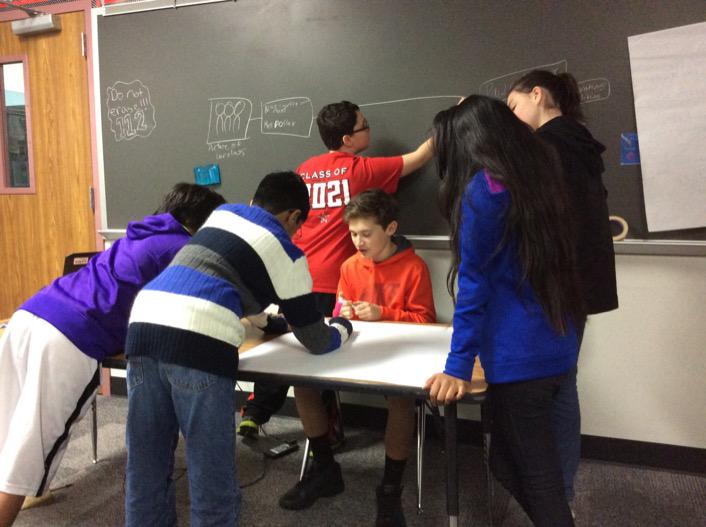
creative writers collaborating on a class newsletter
Trust me. One of the most difficult things for an educator to do is to step back and give learners control over their writing.

I can already hear the voice of naysayers. "How will young and inexperienced writers learn if we don't show them?" True. But we also need to step back and let young writers fall into their own style and find their voice.

The last thing we need are more cookie cutter writing samples. My goodness! We need to create writers who will stand out from the crowd!

Easier said than done, right?  Shifting from a fixed mindset to a growth mindset is imperative in order to accept imperfection and embrace the writing process. Freeing writers from fear based writing begins with an environment that celebrates taking risks!

2. Create a learning environment that focuses on growth not the grade.

I've come up with a name for an excessive focus on grading. I call it "gradidous". It seems to start in 6th grade and reaches near epidemic proportions by 8th grade.

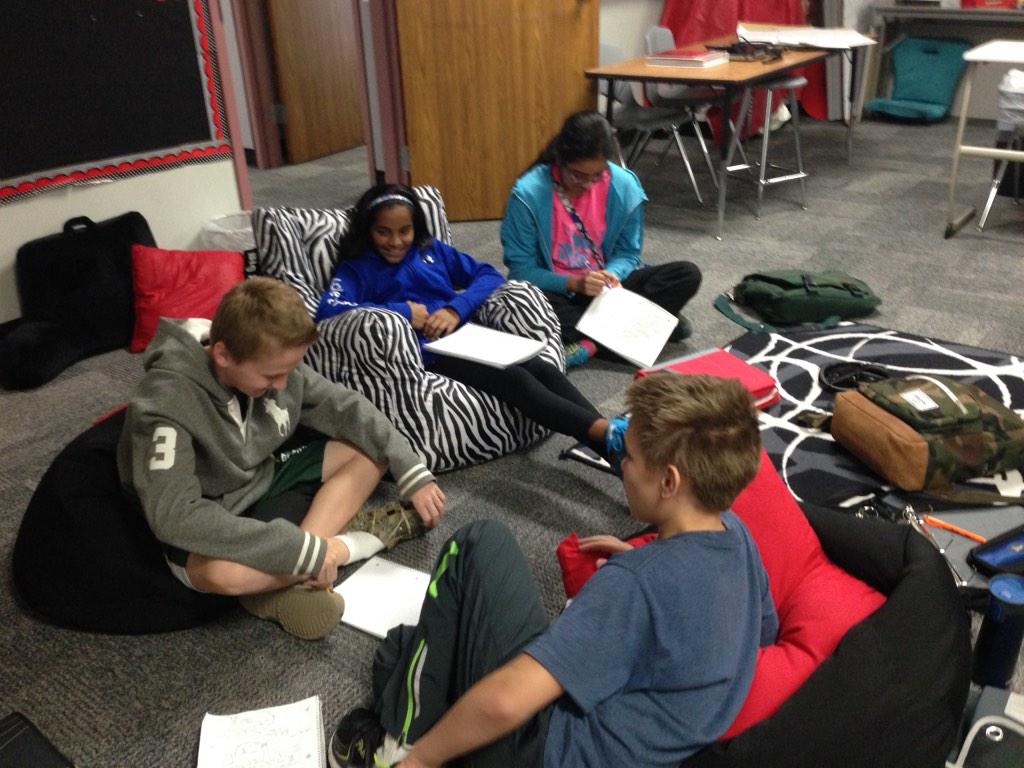
creative writers give and get feedback from peers
Gradidous is most often the root cause of fear based writing. Symptoms include (but are no limited to) plagiarism, overt parental involvement in assignments, or worst of all, an "I don't care" attitude of the heart.

I learned this lesson from Samantha (not her real name). Samantha was the archetype perfectionist writer who relied heavily on parent coaching. I finally required journals to be left in the classroom. Samantha one upped me and asked to use technology to write. Of course! Isn't part of learning about giving voice and choice?

creative writers have voice and choice
Are you sitting down? I discovered a parent (or someone) contributing to her writing from another location using a shared google doc.

Samantha was literally having another person write for her using google docs! When Samantha discovered what she was able to do on her own, learning could take place. Furthermore, removing the "A" or "100" ball-and-chain allowed her to de-stress and find her own voice.

What does a grade say anyway?  It is far more valuable to sit down with a learner and talk thru their writing, or better yet, have writing communities for learners to support one another. Even the best of compliments are nothing but hot air without meaningful feedback that encourages and coaches on ways to polish their writing. Some of our learners may write like scribblers. Everyone is on a different stage and page in the writing process and they need to be treated as such.

Digital portfolios, writer's notebooks, reflection journals allow learners to show growth throughout the year. Keep the focus on growth!

3. Create an environment that extends beyond the classroom.

By middle school it isn't enough to have a their papers taped to grandma's refrigerator door. LearnersWhat does my writing matter? Why am I doing this? Kids need to know the expectations and purpose for the assignment.

Is the assignment to relay information about a Science experiment? (Expository) Is the purpose to share with others my feelings or write a story? (Narrative). Every writer needs to have purpose other than "it's part of the curriculum" or "it will prepare you for high school."
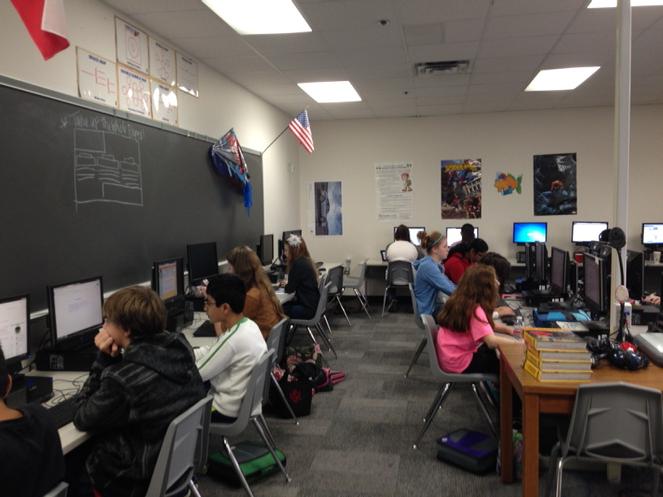
creative writers composing interest-driven stories

Marcus (not his real name) refused to write. Not only did he refuse to write, he was an in-your-face kid would wasn't afraid to show his contempt for writing. However, he did like to draw
.
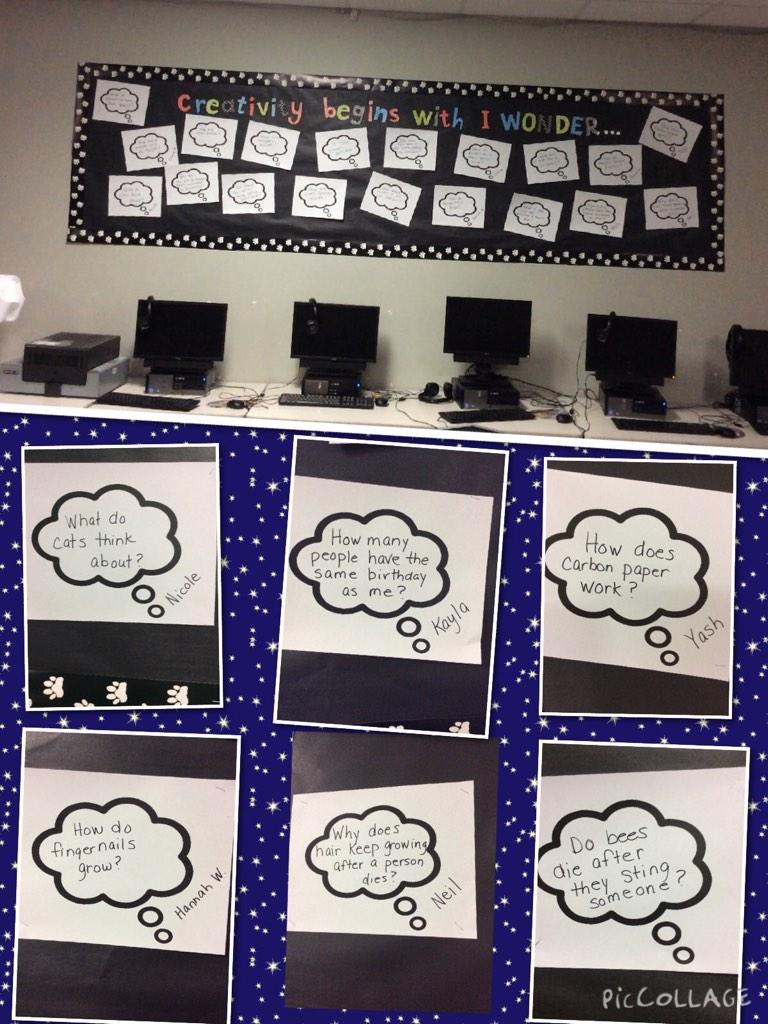
our class "wonder wall"
Exasperated I said, "Forget that you're writing. If you can express yourself in pictures, go for it!" What happened? He doodled daily and ended up creating a series of doodles which became a graphic story with high hopes to publish one day.I truly believe that Marcus's ability to express himself was a far greater lesson than anything he could have learned thru traditional methods.

Marcus needed purpose beyond the four walls of our classroom. He needed to know that his writing mattered. Yes, there were teachers who shun this method, but when a learner is failing and emotionally heading down a destructive path...you do what's best for that child.


As the new year begins, I pledge to give learners more opportunities during the school day to blog, journal, free write, and even text. Now that I think about it, isn't writing about communication? There is an ebb and flow to every writer as they step into their own style. Fearless writing begins in the safety of a classroom where risks can be taken, growth is celebrated, and purpose goes beyond the walls of a school.

Confession Reflection:

1. Why is it important to individualize writing instruction?
2. What are some other ways writing can be measured other than grades?
3. How can writing instruction be designed to teach structure but also spark creativity?


Monday, December 8, 2014

How Not to Be A Grinch During The Holiday Season


As we enter the Yuletide season of joy and giving, let's be honest. Every last nerve in our body is about to tested. Our students are on the verge of eating excessive amounts of sugar for breakfast, lunch, and dinner. They will be bombarded with ads for the newest, coolest toys on the internet and at their neighborhood Walmart.

Their eyes will glaze over during class with visions of robot toys that shoot lasers at annoying little sisters, or video games that blow up evil empires while simultaneously chatting with an opponent in the UK.

As engaging as we try to make our lessons, they will not be able to compete with the big man in the fat red suit sporting a white beard who owns flying reindeer.  Yes. Whether we want to admit it or not, we are all at risk of becoming a Grinch.

Before it's too late, I've pulled together five safeguards to protect our students, parents, and ourselves.

Safe Guard #1. Expand your heart.

During this holiday season, two types of students tend to emerge. The Cindy Loo Who's who are innately kind, loving, and will complete homework and projects in a timely manner. You will love these students. "Who" wouldn't?

But what about the non-Cindy Loo Who's who will fail to complete assignments, push your last button, and then go home and tell their parent that you hate them. Take a deep breath. A mentor of mine once said, "Fake it until you feel it." Act like you love The Cindy Loo Who's and the Non-Cindy Loo Who's and you'll be surprised when your heart catches up!

"And what happened then? Well, in Whoville they say that the Grinch's small heart grew three sizes that day." The Grinch Who Stole Christmas

Safeguard #2. Collaborate don't isolate.

It is easy to feel like you are the only teacher on the planet who is considering early retirement (and
it's your first year) but know that you are not alone! Teachers all across the U.S. and Canada are feeling the effects, as well.

Just as you would never attempt Black Friday or Brown Thursday alone, you should not take on the days and weeks leading up to winter break alone. Go to your team and express how you are feeling. Chocolate also helps!

Safeguard #3. Be realistic. 

As excited as you are about completing an ice sculpture of the Great Wall of China in your World Geography class, this is not the time or the place.Variables like shorter attention spans, additional carbs to induce sleeping, and inevitable interruptions by your former students coming by to remind you why you love to teach, are very, very real.

Ask yourself. What assignments can wait until these variable diminish? Separate the need to do's from the I want to's and you will become far less frustrated. Taking on too much can make you feel like you are a horrible teacher, which of course, you aren't.
Safeguard #4. Be kind.

Even if you have failed miserably at Safeguards #1-#3, it is never too late to change your behavior. Before sending out the mass email and a bcc: to your principal about the teacher whose students are climbing the walls. Stop!

Before posting or emailing anything ask yourself: Is it biased? Could it be taken out of context? Is it hurtful? If you can answer one or more of these questions with a yes, you need step away from your computer, Ipad, or Iphone and take a deep breath.

This is the perfect moment to engage in a random act of kindness!

Safeguard #5. Be thankful.

Hands-down one of the best Grinch repellents is a spirit of thankfulness. Begin making a list of reasons to be thankful. Warning: While you may exude thankfulness on a normal basis, you may struggle. This isn't to say you aren't a grateful person...because you are! Remembering the reasons you are thankful is more about reminding you of the person you truly are. You are NOT a Grinch..so don't act like one!

Wednesday, November 26, 2014

A Thanksgiving Tribute to Charles Schultz

charles schulzEvery year before Thanksgiving break I give a mini lesson to my creative writing class on the Peanuts cartoon creator, Charles Schultz. I begin with something like, "Long before there were blogs, Twitter, Instagram, or the internet for that matter, there was a form of communication made entirely of paper."

I pause for dramatic effect and with all the enthusiasm I can muster up I say. "It was called a newspaper!"

At this point, eyes roll and I get the usual "Mrs. Dollar we know what a newspaper is!" Next, I stream a vintage Peanuts cartoon strip onto a screen in front of the class.


"But wait!" I say excitedly. "What you may not know is that Sunday was my favorite day because cartoons were....are you ready...they were printed in color!" 

I confess it gets harder every year to get a middle school audience excited about the Peanuts creator. If it weren't for holiday specials and parade inflatable floats, Charlie Brown, would most likely be forgotten as have many vintage cartoon characters like Lil' Abner or Blondie. But I press on because cartoonist like Charles Schultz have so much to teach us.

There is something raw and honest about his cartoons.

Charles Schultz admitted that Charlie Brown was his alter ego. I found a clip that shows the artist sketching Charlie. He says,"Charlie Brown is I think a little bit like everyone. We all need reassurance to know that someone likes us." http://www.tubechop.com/watch/4221600

As my family prepares for our holiday meal, we have A Charlie Brown Thanksgiving on the television. Once again, Charlie Brown feels like he's ruined everything. I think we all have felt this way at one time or another. I know I have.And once again we are reminded of the true reason we celebrate:

 Charlie Brown: I don't feel bad for myself, I just feel bad because I've ruined everyone's Thanksgiving.

Marcie Brown: But Thanksgiving is more than eating, Chuck. You heard what Linus was saying out there. Those early Pilgrims were thankful for what had happened to them, and we should be thankful, too. We should just be thankful for being together. I think that's what they mean by 'Thanksgiving,' Charlie Brown.


Charles Schultz once wrote a brief quiz that went something like this:

Name three Nobel prize winners.
Name the three wealthiest people in the world.
Name this year's Heisman trophy finalists.

Then he asked three more questions:

Name three teachers who affected your life.
Name three friends who stood by you.
Name three people you like to be around.

Charles Shultz believed that celebrities don't make the biggest impact on our lives. The people close to us do. The people we live and work with and those who care about us are the ones who matter most.

And to this I say, "You're a good man, Charles Schultz!"

To learn more about this incredible man check out HuffPost's 20 Things You Didn't Know About Charles Schultz

Sunday, October 12, 2014

5 Things Bad Teachers Do Very, Very Well!


1. Mr. Ima N. Kuntroll: Ultimate Disciplinarian
Bad Teachers run their classrooms with military precision. Desks are in neat rows. You can hear a pin drop. Not only are their classes in perfect order, the Bad Teacher will be quick to point out to the principal (or even a School Board Member or two) how the new, unruly teacher across the hall has let his/her class run amuck.

The Bad Teacher has no tolerance for students talking, moving around, using technology without the constant supervision of the all seeing eye. Past performance records reflect their "well-run" classroom. Mr. N. Kuntroll prides himself on being the Captain of his Ship!
 
2. Ms. Claire Itty: The Lecturer
 

The Bad Teacher is able to teach with their eyes closed. Their voice is most often monotone and assume their students understand every word they're saying.

Strategies like introducing academic vocabulary before a unit or providing background knowledge are meaningless endeavors, especially since these tidbits of instruction were part of a prior grades' curriculum.

The Bad Teacher readily accepts the responsibility of teaching the grade-level curriculum. No more. No less. Ms. Claire Itty will be the first to tell you, "It is the student's job to ask questions when they do not understand."


3. Mr. Wunsize Fitzall: The Lesson Designer

The Bad Teacher is indubitably gifted in the art of lesson design. He is able to take state standards and seamlessly design a lesson to fit all students regardless of age or ability level.  Special Needs? Gifted and Talented? English Language Learner?

Response to Intervention? No problem! Each of these students will be expected to master the learning material without scaffolding or differentiation.

Mr. Wunsize Fitzall will be the first to tell you, "Our job is to prepare students for the real world. Adults don't get a scaffolded tax return."

. Ms. Fave Ortism: The Affirmer
The Bad Teacher is able to recognize the brilliance in her students, in spite, of what other students tell her. She wears the proverbial rose colored glasses. Be rest assured, when end of year award
nominations come out, it will be the student who is: studious, quiet in class, courteous, and is able to sit for extended lengths of time without the slightest shift in his/her desk.


On the flip side, The Bad Teacher will be ready, at the drop of a hat, to give zeros in the grade book and points off in an effort to shape the unacceptable behavior of distracted and talkative students. Ms. Fave Ortism recalls with fond memory, "I am able to spot the class pet within the first week of school. It is a pleasure to read and grade every assignment. I never tire of giving this student an A+ +  +."


5. Mr. Smartie: The Know-it-All!

 Anyone? Anyone? clip from Ferris Bueller's Day Off.

Bad Teachers are experts in their subject area. Their students are merely empty containers in need of the teacher's vast expertise to fill their empty minds. Regardless of advancements in technology, the Bad Teacher knows more.

How is this possible? Why, they have had more life experience and most likely have a Master's in their field of study. This is in no way to trivialize continued education! However, the Bad Teacher will forever remain the smartest person in the room. Mr. Smartie is quick to raise the point: What will happen when computers break?

 
Confession Reflection:
1.  Why is it important for teachers like Mr. Smartie to engage in continued professional development, especially in the genre of digital literacy?
2. How do administrators and instructional coaches support teachers like Mr. Wunsize Fitzall to design lessons that help level the playing field for struggling learners?
3. What are ways administrator's can protect new teachers from teachers like Mr. N. Kuntroll, who are mean spirited, and try to discredit them?


Sunday, September 7, 2014

Christmas in the Great Outdoors!


It wasn't my idea to have a Christmas in July party, but it happened. Imagine. Red house lights  blinking in the heat of the summer. Jingle Bells blaring from the stereo. A lamp post adorned with mistletoe and topped with a giant bow. Yes, and even a Christmas tree, tinsel and all, sitting in my driveway. Oh, and did I mention the reindeer? I'll get to that later.


I'm not exactly the social butterfly when it comes to neighborhood stuff. While I appreciate the occasional Bunko game or Tupperware party, I'm not one to initiate festivities. If you asked me to rate myself on the social spectrum, I may rate "plays well with others" but not much past that. Outside of my church and weekly Saturday morning coffee clutch with a few girlfriends, my social life has much to be desired.
When our church Care Group brought up the idea to have a Christmas in July party to get a jump start to support a local charity, I wanted to crawl under my chair. Since I was a group leader, I felt obligated to smile and say, "What a great idea!" Inwardly, I was thinking, How will our neighbors know that this is really going to a charity? What if they think we are con artists hording gifts for our own children?

I bounced the idea off of one of my best friends and told her my worries. Instead of affirming my fears, I heard, "Tamra, I think your overreacting."

Okay. I admit it. I have an overreacting problem. Like the time I was getting ready for a college sorority party and set the iron too hot and seared a hole in my favorite purple silk blouse. What did I do? I threw the singed iron away and swore to never iron again. I kept my favorite blouse with the triangular shaped hole hanging in my closet for weeks hoping I'd wake up and it would all have been a terrible dream. As for ironing, I've kept my promise.

And so we booked our children's pastor, Kelly Welhelmi, to put on a puppet show dressed in her outrageous character, Rudette, Rudolph the Red-Nosed Reindeer's sister. We printed off over 100 flyers and posted to every house on our cul-de-sac and surrounding blocks asking neighbors to bring an unwrapped gift. At the bottom of the flyer in bold face type was: All gifts will be distributed through our churches' children's outreach.

Well, a Texas heat wave had hit and my family and our church small group were sweating bullets the night of the party. We had fans blowing and chilled lemonade and enough watermelon to feed an army. A few members from our church small group mingled waiting to be swarmed by neighborhood children. My front yard was a sight to see with a Christmas tree in the driveway, house lights, and even mistletoe over the doorway entrance.


We waited. And waited. And waited some more. Where were my neighbors? I was embarrassed and was secretly hoping we'd printed the wrong date on the flyer. After forty-five minutes, my next-door-neighbor walked his nine-year-old daughter over to get a better look at the lady wearing a brown suit, antlers that dangled tinsel, and a glittery red nose. She placed an unwrapped My Little Pony toy and planted herself on our lawn. How could it be that only one child showed up?

And so I succumbed to my weakness. I overreacted.

I gave marching orders and sent my three children who at the time were, 5, 7, and 10 years, to knock on their friend's doors. I no longer cared about the gifts, I cared about saving face.

And that's when it hit me! Suddenly, I felt a sick feeling in the pit of my stomach and wished I could undo the moment I'd agree to the party. I'd cared more about collecting gifts for children I didn't know...without taking the time to build relationships with the people on my own street.

As it turned out, my kids were able to round up their friends...and neighbors slowly began to show up. I'm pleased to say by the end of the evening we ended up with around thirty people.


Looking back, something far more important than collecting gifts happened. I got to know my neighbors. The man whose dog barks all night. The lady who is pregnant with her fifth child. The kids who cut through our yard on their way to school, carrying their skateboards. The young couple who recently adopted a two-year-old from Korea. And we learned their names.
Long after the watermelon had been eaten, and Rudette had gone to wherever Reindeer go in the summer, our band of neighbors were talking, laughing, and sharing stories. Without asking, a collection was taken and we raised enough money to buy gifts. By all accounts, my Christmas in July party was a success. Our party had a write up in the neighborhood section of our local newspaper and my Christmas in July story was published in our church's monthly newsletter.

This year as I make last minute touches on my classroom, I am reminded that at the end of the day learning and teaching are about relationships. By nature teachers are task-oriented and standards-driven and sometimes lose focus. I recently watched this Ted Talk video by Rita Peirson and was reminded of the importance of valuing relationships: with our learners, parents, co-workers, and our community. Teaching is not only about content. It's about loving people.

Rita Peirson on building relationships with out learners:
http://www.ted.com/talks/rita_pierson_every_kid_needs_a_champion

Confession Reflection:

1. Why is it important to begin the school year focusing on relationship building?
2. What are some ways educators can nurture relationships outside of the classroom? In the community?
3. How do educators build a classroom community that is emotionally safe and encourages learners to explore and take risks?